People of SYSA: Jay Patrikios & Cassie Martin, Woodland Volunteer Soccer Coaches
Jay Patrikios and Cassie Martin are partners who coach for Woodland Soccer Club. Jay currently coaches their son's U9 team and Cassie, their daughter's U10 team. Recreational soccer is all about the kids having fun and enjoying the game: both Cassie and Jay embody this through and through and it is exactly why they come back each year and continue volunteering their time. They understand the immense value that recreational soccer provides to their kids, and to everyone, in the community. Here's more from our conversation with Cassie and Jay:
Welcome to our 'People of SYSA' series! This series is where we talk with players, coaches, administrators, parents, referees and volunteers from all across SYSA and learn a little bit about them and why they love being a part of Seattle Youth Soccer Association.
Rec soccer in Seattle runs on volunteers. Without volunteers to organize practice fields, do the admin work and coach the teams, thousands of kids would not get the opportunity to play soccer each and every year. In this edition of People of SYSA, we are proud to feature not just ONE of SYSA's amazing volunteer coaches, but TWO of them: and from the same household!
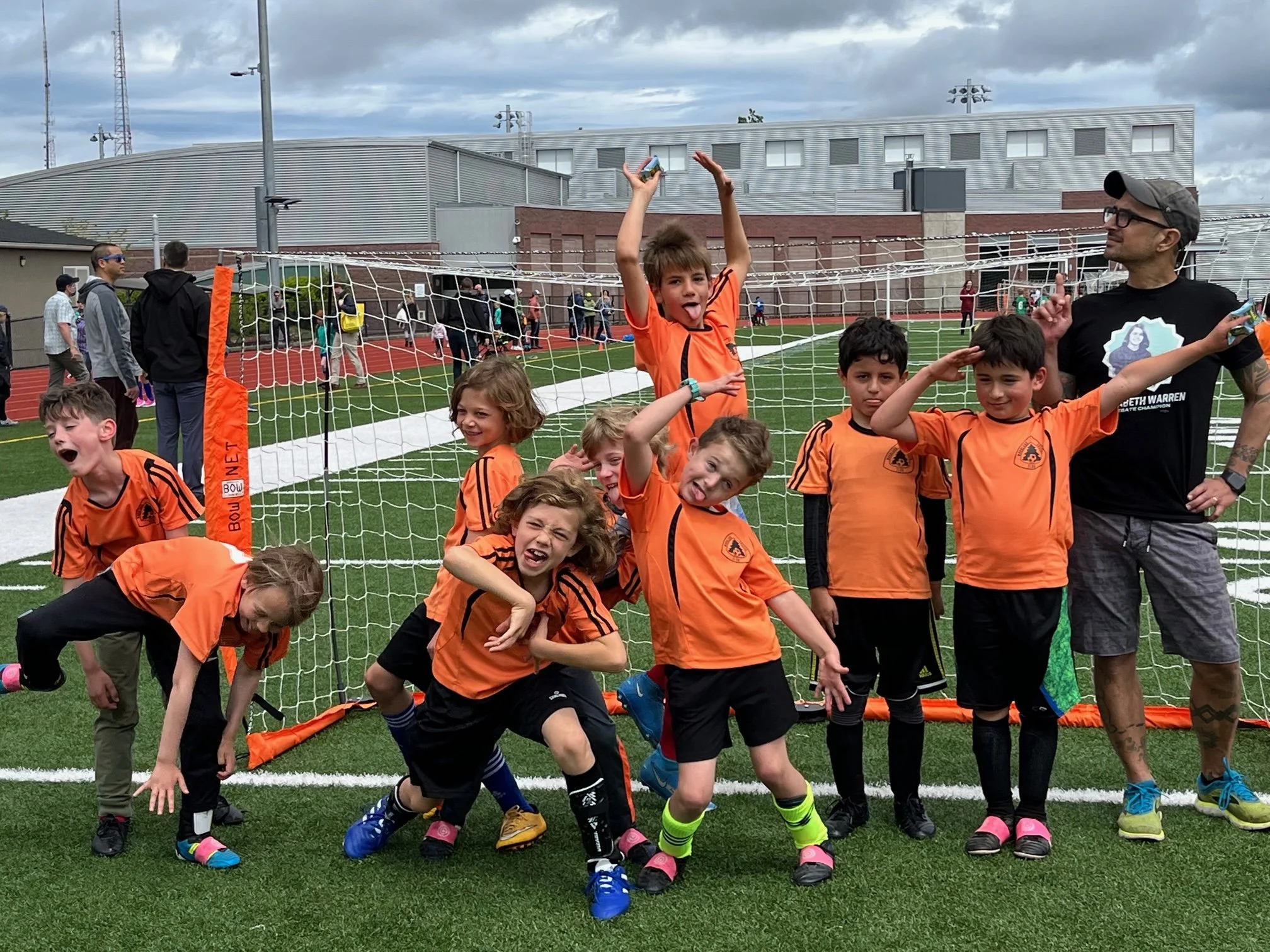
Photos courtesy of Jay Patrikios and Cassie Martin
Jay Patrikios and Cassie Martin are partners who coach for Woodland Soccer Club. Jay currently coaches their son's U9 team and Cassie, their daughter's U10 team. Recreational soccer is all about the kids having fun and enjoying the game: both Cassie and Jay embody this through and through and it is exactly why they come back each year and continue volunteering their time. They understand the immense value that recreational soccer provides to their kids, and to everyone, in the community.
Here's more from our conversation with Cassie and Jay:
GETTING INVOLVED WITH SYSA
Of Jay and Cassie, Cassie is the one that comes from the soccer background. She played all the way up through college, at which point she decided she needed a break from the game. Years later, after seeing the Wallingford neighborhood park full of kids playing soccer, her 6-year old daughter expressed interest. Cassie signed her up to play with Woodland, and signed herself up to coach. "We started out with a group of random kids and now it's a really tight community that we have, 5 years later," says Cassie. Their community extends outside of soccer as well. "One of the parents is a pharmacist and we've done team flu shots. We do stuff like that together. The kids all love one another, it's just been so great."
Jay didn't pick up the coaching mantle until the following season when their son also decided that he wanted to play. He did not have a soccer background like Cassie, but because his son asked him to coach, Jay was happy to do it and enthusiastic about the idea.
THE COMMUNITY ASPECT
When asked about the best part of being involved in the rec soccer world, both Cassie and Jay went straight to the community aspect. "The community part is just really important," says Jay. Looking at his team, 4 years after they started playing together, "the collective is really strong and supportive of each other. The player and parent community is SO strong - we all help each other and it's just been wonderful." Cassie adds how the parents worked hard to kept the kids playing together during Covid and just how healthy that had been for them all to have those relationships during that time.
Extending beyond Woodland, and looking at the SYSA community at large, Jay says it's really awesome how his players will all go a summer camp together, make new friends with other kids from around the city, and then end up playing them during fall league. "The players will remember them and want to go say hi," says Jay. "Community wide, the players remember and make friends with kids from other teams. It's really great."

Photos courtesy of Jay Patrikios and Cassie Martin
Both Jay and Cassie love that team sports have this unique ability to create community. "Team sports can really help you through rough times in life. I see our kids benefiting in so many ways, ways in which you can only get from being on a team," Cassie says. Jay, having been a distance runner and NOT a team sports person growing up, says that now he totally gets it. "I'm actually SEEING it, I am seeing the benefits of the the team stuff, the community stuff. Translating off the field too."
COACHING STYLES
Jay is all about teaching durable skills that translate from soccer to regular life. One of Jay's big things is that he likes having players take leadership of the team. He wants them to feel like the team is THEIR team and that their ideas matter. He incorporates this into his coaching by often asking questions like, "what do YOU think we need to work on?". This approach not only helps the players self-advocate more, but it helps them feel invested in the team and WANT to support their teammates more and work hard for each other.
Cassie also brings in a lot of characteristics into her coaching that are important to the family as a whole. "A big one for me is always be inclusive of everyone," she says. "We really see the kids rallying around each other and finding each other's bright spots. Generosity is another another one: sharing a ball, having a good assist, being generous with your time and your ideas, etc." And last but not least Cassies says, "have fun. Always have fun. Even if you're working hard, you should still be having fun."
Jay fully lives by this when coaching his son's team. "The important thing for my team, is that you've gotta work with their strengths. No rigid discipline, it won't work. Maybe a couple of drills at practice, but then let's scrimmage," he says. "You gotta work with the vibe of the team. And my team, they are wild and fun and they love it."
They both understand that the kids want to play, have fun, make friends and enjoy the game in a relaxed environment with no pressure."Want to know what our team cheer is? Fast Flying Tigers - LET'S HAVE FUN!!!", Cassie says. "After a game, the questions are always 'did you have fun?' and 'did you try your best?', thats it. Never 'did you win?' Rec soccer is so important because of this - it's gotta be all about the fun."
THE BENEFITS OF VOLUNTEER COACHING
Both Cassie and Jay agree that there are a ton of benefits to being a volunteer soccer coach for SYSA. One of the biggest benefits being the added time they get to spend with their son and daughter. "My son asked me to coach his team, and I figure there's a limited amount of time that my kids are going to ask me to do stuff with them. I want to take advantage of this time," says Jay.
Cassie adds, "Coaching is a lot of work, but coaching forces you to stop and do something different with your time. There's something really nice about knowing that you can turn all that stuff off and just focus on the kids."
And for Cassie and Jay as a couple, they have bonded over coaching as well. "It's really cool that we can talk to each other about coaching. It's really nice to bounce ideas off of Cassie that I am considering trying. It's nice to talk to each other about soccer, something that isn't work and isn't parenting and I find it really beneficial. Rec soccer has become a fun aspect for everyone, it creates a fun family dynamic for all four of us."
Thank you so much Jay and Cassie! We here at SYSA appreciate all of the time and dedication you have given to your teams over the years. Rec soccer in Seattle would not be the same without you!
People of SYSA: Tom Powers, Woodland Volunteer Soccer Coach
In this edition of 'People of SYSA', we have the pleasure of featuring Tom Powers! Tom is a dedicated and caring coach who is very invested in the growth of his players. Tom's coaching style is all about development, but not just in the soccer sense, in the HUMAN sense. He is an upbeat, positive and motivating person with a background full of skills that lend themselves well to coaching and working with kids. He has spent his career working in education and mental health and really values the importance of connection, community and working collaboratively on the soccer field. Here's more from our conversation with Tom:
Welcome to our 'People of SYSA' series! This series is where we talk with players, coaches, administrators, parents, referees and volunteers from all across SYSA and learn a little bit about them and why they love being a part of Seattle Youth Soccer Association.
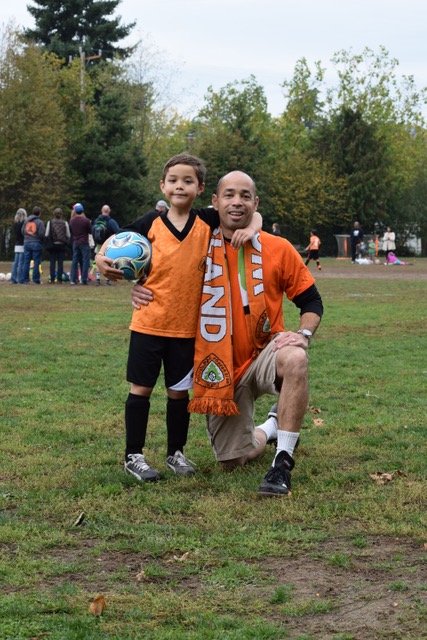
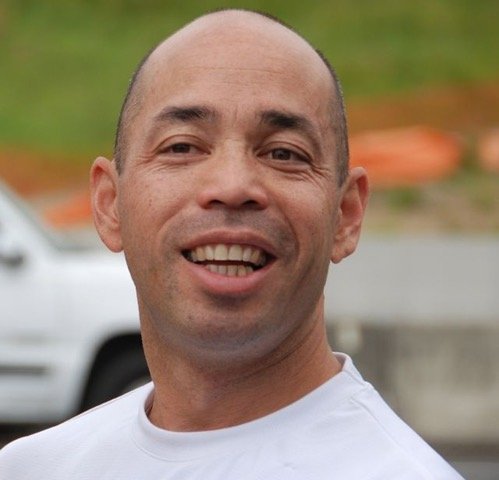
In this edition of 'People of SYSA', we have the pleasure of featuring Tom Powers! Tom is a volunteer coach with SYSA's Woodland Soccer Club and is also an assistant coach at Eagle Staff Middle School. Tom has been coaching his son's rec team at Woodland for the past 8 years. He started with them at U6 and this upcoming 2022 fall season they will be U15!
Tom is a dedicated and caring coach who is very invested in the growth of his players. Tom's coaching style is all about development, but not just in the soccer sense, in the HUMAN sense. He is an upbeat, positive and motivating person with a background full of skills that lend themselves well to coaching and working with kids. He has spent his career working in education and mental health and really values the importance of connection, community and working collaboratively on the soccer field.
Here's more from our conversation with Tom:
GETTING INVOLVED WITH SYSA
Tom is a wonderful representative of community soccer and all it stands for. He started playing soccer in his 20's when he moved to Seattle and joined a recreational adult league in order to meet people. Later, when his son wanted to start playing, Tom was excited and signed him up for Little Kickers. His son didn't take to that first soccer experience very well so Tom decided to try something new and find a different environment. That's where Woodland Soccer came into the picture.
After registering their son for recreational fall soccer, Tom says his wife announced, "the good news is that I got him on a team, the bad news is that you're coaching!" Tom wasn't the first soccer parent in history to have this information bestowed upon them, the difference with Tom though is that he was prepared. Not to coach soccer specifically maybe, but to work with kids and help them grow and expand. And as Tom says about that first year, "it's 6 year olds - at 6 you are not coaching soccer, you're coaching kids."
STRONG TEAM CULTURE
Nine years later, Tom and his son are still involved in SYSA.
After the first 5 good, positive years of recreational soccer with Woodland (years in which the entire team advanced and grew and every kid gained a solid set of foundational skills which they could use to enjoy soccer throughout the rest of their lives) Tom thought that the team would disband and go their separate ways as middle school started up.
"But elementary school ended and EVERY KID WANTED TO COME BACK," Tom said. So he decided to stick with it and coach the Woodland rec team through middle school. After-all, "the kids enjoyed it, I enjoyed it, we always got better, so why not?" he said.
Tom attributes the players wanting to stay to strong team culture. "Our rec team hasn't lost kids because we have good culture. Our team's practice and games are a couple hours in a week where, as long as they show up and try, the kids can't do anything wrong. We've created a culture where players are always willing to keep trying. If someone messes up (your teammate), they usually know it, they don't need you to tell them." And because of this they keep going, they keep trying again and again, they keep working and growing and having fun and getting better.
"To parents, I always say, give your kids space where, for even 1 hour in a week, where they can do no wrong in your eyes. Kids respond to that, they appreciate those things." Tom has built this mindset into his team culture SO WELL that they've had seasons where, despite losing every game, not a single player left. They all returned for more the following year.
Coaching middle school boys is a different picture though, and Tom knows there more issues at play now than when they were younger. "A big thing we always talk about, a big part of our culture, is that you can't trash talk. You can't trash talk your teammates, the refs, your coaches, OR YOURSELF."
Tom says this last piece has really hit home with some of his players, as middle school kids are especially prone to getting down on themselves, holding themselves to standards of perfection and allowing their self-worth to get wrapped up in performance on the soccer field (or anywhere really). A big part of what Tom does well, is he coaches in a way in which these conversations are continually had so that the kids are able to gain self-awareness and start to coach themselves out of their self-defeating mentalities.
IT'S BIGGER THAN WINNING, ALWAYS
Tom's personal coaching mission statement is "through the principled pursuit of victories and the growth-focused management of losses, I coach to develop caring, resilient adolescents who act with integrity."
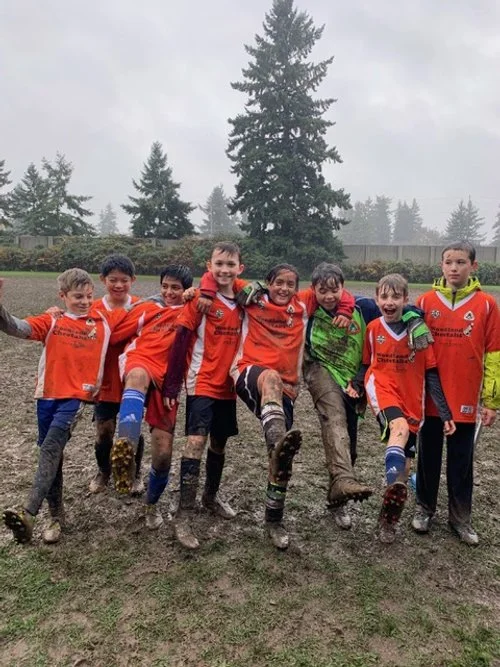
One impactful moment that stands out to Tom and exemplifies this statement fully, has to do with a very muddy game, a 11-2 loss and a cherished photo that reminds him of why he coaches. In this image there are huge grins across the faces of his 9-10 year old players, despite the fact that they just lost big time. This was a game where players could easily have walked off the field upset and self-critical, but not this group and not this time. These kids were happy and thrilled to have gotten to play soccer that day. The experience of playing was bigger than winning.
Tom likes to look at this photo and ask, with a big grin across HIS face, "we lost this game, can you tell?"
Photos courtesy of Tom Powers
Tom loves this photo because it reminds him of his purpose in coaching. It reminds him that helping players feel good about themselves and put their best foot forward is what it's all about. "I always tell them, play in a way that makes you proud. You will always get better, if you show up you WILL get better, you won't get worse."
OBJECTIVE MEASURES
A big piece of Tom's coaching style is that he likes to give his players objective measures to work towards and point their effort towards on game day (instead of outcome or results based measures such as winning or scoring). Objective measures meaning, what makes a good game for YOU? What small pieces of the game can you focus on improving today? "You have to have different metrics," Tom says. "You can find opportunities to be your best self in every game, and throughout the game."
Here's an example: Tom likes to help his players get faster and increase their speed over the course of the season. To start, he tells them "it doesn't matter how good your footskills are if you can't get to the ball". Over the course of the year, he'll time them on 50s, 100s and 200s and by the end of the season they can actually see themselves getting faster. This is an objective measure that they get better at just by showing up and participating. This is a small piece of their game that they are able to improve through effort and working hard.
FITNESS AND ATTITUDE
Tom is a soccer coach yes, but he's also a self-proclaimed "fitness and attitude" coach. These are his strengths and areas of specialty. The attitude piece comes in because his coaching style was born from his experiences of working in both education and mental health. He's able to use his skills and experience to help his players see a different side of the game:
"I can help people see a different value in sports beyond winning. It's the PURSUIT of winning that has value," Tom says. "Sports is a platform for learning life lessons. It's an opportunity to deal with big emotions, it's an opportunity to be a good guy and treat someone well (a teammate for example) even when they let a goal in or make a mistake."
WORDS OF ENCOURAGEMENT
On closing, we asked Tom for his words of advice in regards to players and parents looking to get involved in SYSA soccer this upcoming fall season.
SYSA - Any advice for parents who have been thinking about getting into coaching?
Tom - "Just do it. It's an opportunity to build a great relationship with your kid and to get to know how they are at their best and worst. It's a window into their life that you wouldn't get otherwise and allows you the chance to have more influence especially as they get older and are at vulnerable stages. I have been able to have more open conversations with my son because I already saw and knew so much about how he deals with emotions: because of soccer, it has been easier to talk about other stuff. So it's been a great opportunity to stay involved in his life and not get shut out."
Also - "coaching also allows you to do some good in the world, no matter how everything else went that day. It's also brought me lifelong friendships with other parents that I wouldn't have met otherwise. Really though, I just enjoy it (coaching) and I wish more people who truly had that perspective (to give kids an enjoyable time) would jump into coaching. At the rec level, we are here for fun and enjoyment, and lots of people can contribute a lot for these kids."
SYSA - Any advice for players who have been thinking about trying soccer for the first time?
Tom - "Join rec because it's fun! Jump in and try. If you don't like it, you don't have to keep doing it. I always say to my players, rec soccer is a VOLUNTARY recreational activity, nobody NEEDS to be here. If anyone really hates it just let me know and I will talk to your parents."
Thank you so much Tom! We appreciate you and are so glad you are a part of our SYSA family!