Feature Friday: McGilvra Soccer Club
Founded in 1973 after branching off from Capitol Hill Soccer Club, McGilvra Youth Soccer Club has been a vibrant part of the Madison Park and Madrona neighborhoods for over five decades. Today, it serves more than 650 youth players, many of whom attend local schools such as McGilvra Elementary, The Bush School, Epiphany School, The Valley School, and Madrona Elementary.

McGilvra offers two main programs: the MOD program for players under 8, and the Associate program for players 9 and older. To support new volunteer coaches, the club also provides professional coaching assistance during practices—ensuring a positive experience for both players and coaches.
McGilvra’s success on the field is matched by its commitment to development and sportsmanship. In 2024, the BU15 McG Panthers—coached by Ray Robinson, SYSA’s 2024 Boys Coach of the Year—secured their second consecutive SYSA City Championship. The GU11 McG Boltz and BU12 McG Blazers also claimed city titles this year, showcasing the club’s depth of talent across age groups.

Leading the club since 2023 is President Nick Tchemitcheff, a longtime local player who brings passion and community focus to the role. Under his leadership, McGilvra continues to emphasize inclusivity, offering full and partial scholarships to keep soccer accessible for all families. Scholarship inquiries can be made by emailing info@mcgilvrasoccer.org, and donations toward the scholarship fund and equipment can be made at givebutter.com/wrG6JI.
The club also recently welcomed 1-1 Fitness, a Madison Park-based personal training studio, as its newest sponsor—deepening its local partnerships and community ties.
Volunteers remain the backbone of the club. McGilvra is currently seeking coaches, assistant coaches, and team managers, as well as two key board positions: Treasurer and Equipment Coordinator. Interested community members can learn more atmcgilvrasoccer.org or email president@mcgilvrasoccer.org.

Feature Friday: Hillwood Soccer Club
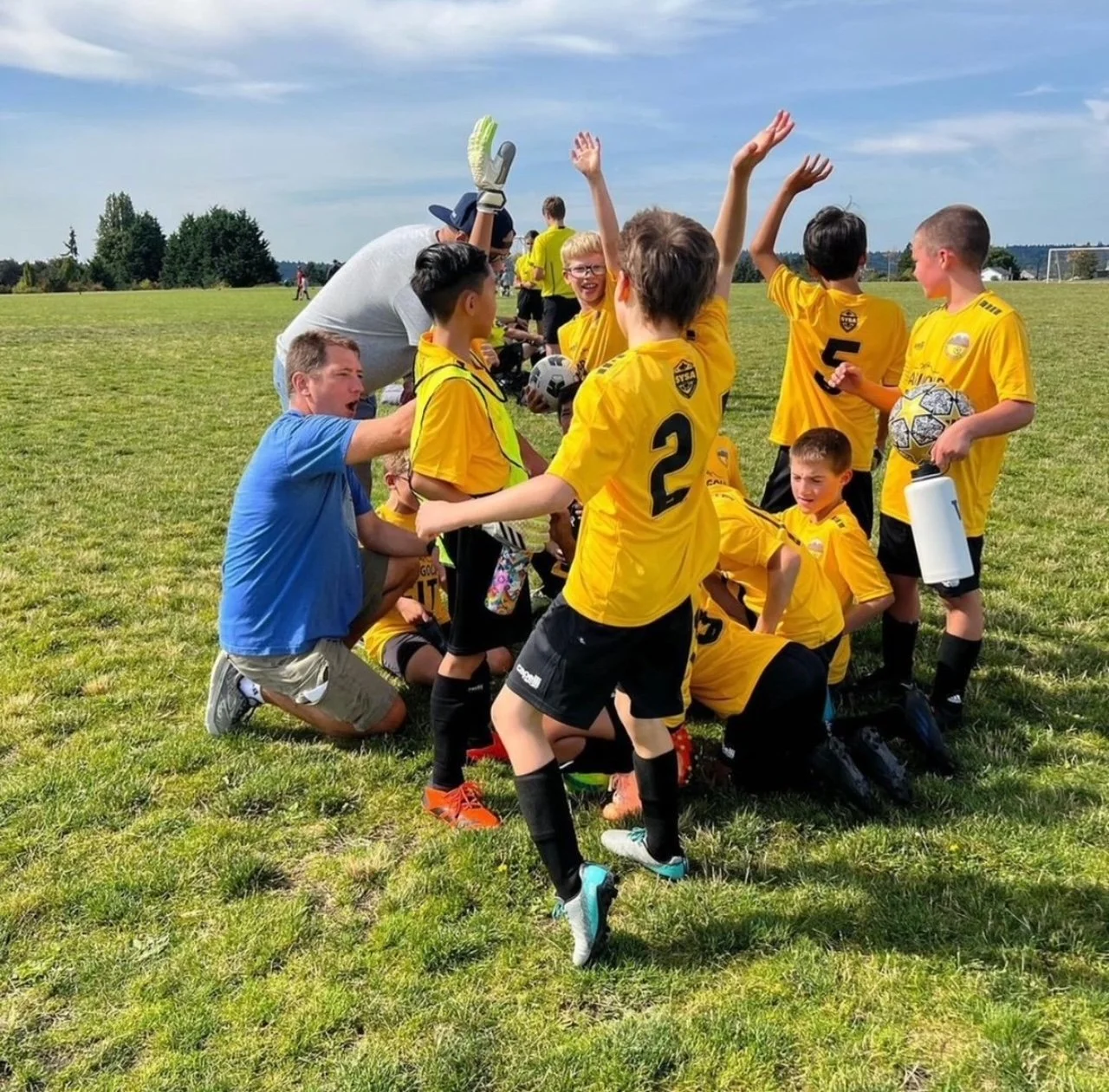
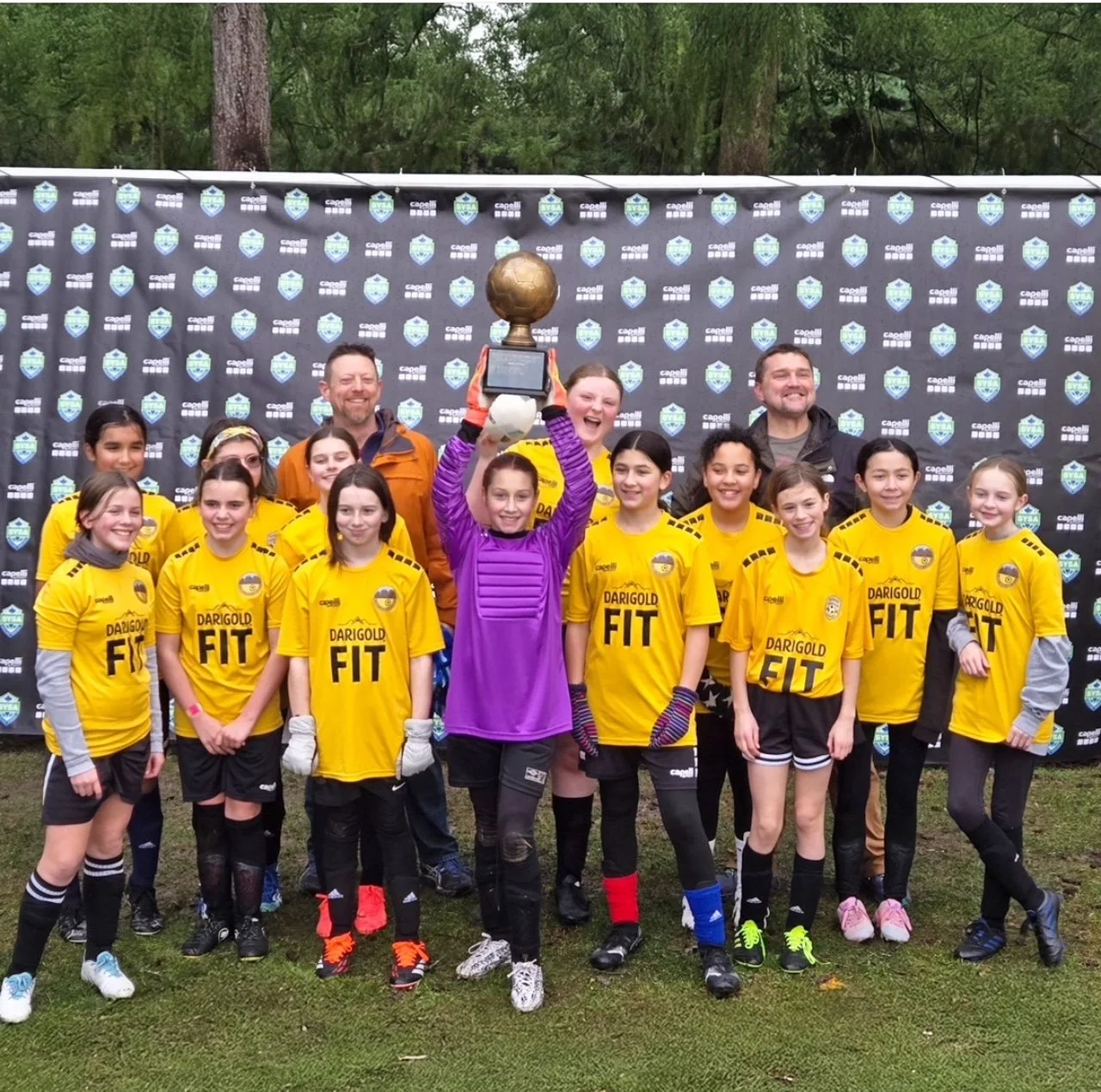
With over 850 players and growing, Hillwood Soccer Club is proud to serve the west side of Shoreline, welcoming students from Syre, Parkwood, Highland Terrace, Echo Lake, Einstein Middle School, and Shorewood High School. They’re all about creating a fun, supportive environment where kids can learn, grow, and fall in love with soccer.
This fall, they’re excited to launch their very own Junior Referee Program, giving young players a chance to learn the game from a new perspective. They’re also proud to continue their partnership with Darigold, helping provide low-cost uniforms to families across the club.
Club President Silas Lindenstein, now in his third term, has coached three teams with Hillwood—one for each of his kids! “We’re looking forward to continuing to offer great opportunities for coach development and creating a more supportive atmosphere for all of our players,” says Silas.
Hillwood is powered by volunteers, and they’re always looking for coaches, team managers, and field helpers to keep game days running smoothly.
Scholarships are available during registration to ensure every child can play, no matter their financial situation.
🔗 Learn more or get involved:hillwoodsoccer.org
📩 Contact us: info@hillwoodsoccer.org
Feature Friday: Woodland Soccer Club
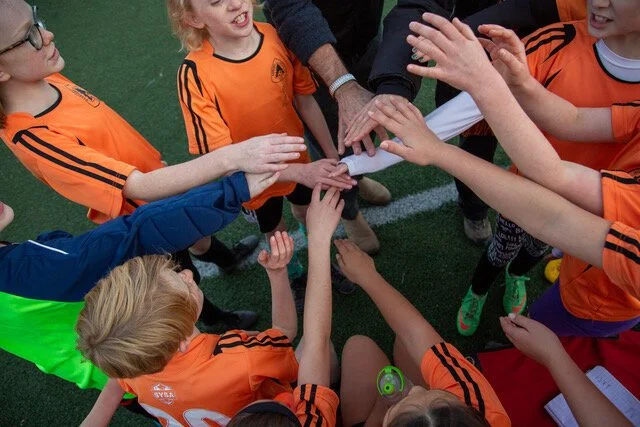
With a deep commitment to community and fairness, Woodland Soccer Club (WSC) is proud to provide recreational soccer opportunities to more than 1,250 children across the neighborhoods of Green Lake, Wallingford, Fremont, and Phinney Ridge. As one of the 12 neighborhood clubs in SYSA, Woodland continues to grow its programs while staying true to its mission: fostering a love for the game in a fun, equitable, and inclusive environment.
A Club Built on Balance and Belonging
Led by longtime president Steve Simpson, who has served the club for the past five years, WSC prioritizes team parity—ensuring no dominant or deficient teams. Their goal is to make every game a meaningful, enjoyable challenge, where players can grow their skills and confidence in a supportive setting. This emphasis on equity not only promotes better competition but also strengthens the sense of community among players and families.
Fall 2025 Program Offerings
Woodland Soccer Club offers programs designed for youth of all ages and experience levels:
🟢 Intraclub (U06/U07)
Games are played exclusively among WSC teams.
WSC manages all league details and scheduling.
8-week season focused on fun, fundamentals, and friendship.🟡 Interclub (U08/U09)
Teams compete with nearby clubs like Ballard and Queen Anne, along with other Woodland teams.
Teams are placed in Bronze, Silver, or Gold divisions to ensure appropriate competition.
8-week season with increased challenge and opportunity.
🔵 City Recreational (U10+)
Matches take place against teams across all SYSA recreational clubs, as well as within WSC.
Divisions are skill-based to encourage growth and fair play.
10-week season for players ready to take the next step.
Whether your child is new to soccer or returning for another season, WSC’s programs provide a clear and welcoming development path from beginner to advanced recreational play across Greenlake, Wallingford, Fremond, Phinney Ridge.
Supporting Families On and Off the Field
Woodland stands out not just for its programs, but for the care it extends to its families:
The Shoe Bank – A unique offering where families can exchange clean, gently-used cleats in both child and adult sizes. Created and run by WSC parent volunteers, the Shoe Bank reduces financial barriers and keeps kids equipped to play. Learn more here
Gear Voucher Program – In partnership with Big5 Sports, WSC provides special discounts for kids who need additional support for soccer equipment.
Full Financial Aid Available – WSC believes cost should never be a barrier to participation. Families can receive fully funded financial aid to ensure every child has a chance to play.
Get Playing
Fall soccer registration is now open, and teams fill quickly. If you live in the Woodland service area and are looking for a place where your child can develop their skills, build friendships, and grow their love of soccer, Woodland Soccer Club is the perfect home.
👉 Register now at: www.woodlandsoccer.org
📩 Questions? Contact the club directly at: info@woodlandsoccer.org

Welcome to the Best Part of My Week: Tom Powers, Washington Youth Soccer’s Boys Recreational Coach of the Year

For many, coaching youth sports is just a weekend commitment. But for Tom Powers, it has been a life-changing experience spanning more than a decade. His story is not just about soccer—it’s about mentorship, growth, and community.
From Teacher to Coach: A Journey Begins
Tom's journey into coaching wasn't planned. A high school French teacher by trade, he first dipped his toes into coaching while working at boarding schools in New England, leading cross-country and track teams. Soccer wasn’t initially in his wheelhouse—he hadn’t played growing up. But when he moved to Seattle 30 years ago, he joined a recreational soccer team to meet people.
Fast forward to when his son turned six, and Tom & his wife faced an unexpected hurdle: there were far more registered players than coaches. His wife made a few calls and found a solution—Tom would be the coach. That first season, coaching wasn’t about tactics or strategy; it was about teaching six-year-olds to be kind, to work together, and to simply enjoy the game. What started as a short-term fix evolved into a commitment spanning over a decade that continues into the present.
The Heart of Coaching: Relationships Over Wins
Despite coaching being a major time commitment, Tom has never wavered. When asked why he returns season after season, he gave an emotional answer. “You come back because the kids count on you,” he shared. “You see their growth, their progress, and you hear about the impact you’ve made from both the kids and their parents.”

Tom’s philosophy is simple: It’s not about winning; it’s about playing with integrity. He frequently reminds his team, “I would rather lose well than win poorly.” To him, success is about sportsmanship, teamwork, and personal growth. He’s created a culture where post-game recognitions focus on effort and encouragement rather than just results. This culture has evolved outside of the game and into the players' school and home lives.
Coaching Challenges: Setting Expectations
While working with kids has been rewarding, managing parents in the early days was one of the bigger challenges. Tom believes that all parents want the best for their kids, which makes them strong advocates and passionate fans. That intense parental involvement, however, could show up in unproductive ways such as questioning playing time and coaching from the sidelines.
To address parental behaviors and keep the game fun for kids Tom developed a “How to Cheer” cheat sheet, helping parents reframe their approach in a way that supports their child’s experience.
He also established a clear rubric for playing time: effort and attendance mattered more than raw talent. This helped create a fair and transparent team culture, one where players and parents alike understood the values of commitment and hard work.
A Mental Health Approach to Coaching
As a mental health counselor, Tom integrates his professional background into his coaching philosophy. He believes in resilience, emotional intelligence, and positive reinforcement. Through tough losses, he encourages his team to find successes beyond the scoreboard. “It’s easy to find victories when you win,” he says, “but we focus on recognizing our strengths no matter the outcome.”
One of his proudest moments came not from winning a championship, but from watching his players support and show up for one another.
Coaching His Own Son Formed A Unique Bond

Coaching his son has been one of the most rewarding aspects of Tom’s journey. “I really know my son,” he says. “It’s given us a connection that many parents and teenagers don’t get to have.” As his son has grown, their relationship has evolved from player-coach to mutual respect and collaboration. Now, they even play on a recreational team together—equals on the field, sharing their love for the game.
Winning Coach of the Year: More Than an Award
When Tom won “Coach of the Year,” his initial reaction was modest. But after reading the nomination packet—filled with testimonials from parents and players—he realized the depth of his impact. One player shared, “If it wasn’t for Tom, I wouldn’t even be playing soccer. I’m not into sports, but because of this team, I stayed.”
Another parent recalled how, during the pandemic, Tom created a running club just to keep kids active and engaged. The recognition wasn’t just for his coaching, but for years of dedication to fostering a supportive community.
Looking Ahead: The Final Season and a Lasting Legacy
With many of his players becoming high school seniors, this will be the last season for Tom’s team, the Woodland Cheetahs. But his commitment remains unwavering: “I made a promise to coach every player through their senior year.” Though the team will disband, the relationships and lessons will last a lifetime. Some of his players may continue to play in college, some may move on—but all of them will carry the values they learned from their time with Coach Tom.
Advice for Future Coaches: “Do It.”
Tom’s advice for aspiring coaches is simple: “Do it. Kids need you. You can make a difference.” He encourages coaches to define their mission beyond wins and losses. His personal coaching philosophy? To develop caring, resilient kids with integrity.
“Welcome to the best part of my week,” he tells his players, even on the toughest days. And for every child who has played for Tom Powers, they know that sentiment is genuine.

People of SYSA: Duncan Munro, Referee, Referee Mentor & member of the Washington State Referee Committee
Welcome to our 'People of SYSA' series! This series is where we talk with players, coaches, administrators, parents, referees and volunteers from all across SYSA and learn a little bit about them and why they love being a part of Seattle Youth Soccer Association.
If you've ever wanted to get inside of a referee's mind, buckle up, here we go! Our interview with Duncan Munro who currently works as a Referee, Referee Mentor and is a member of the Washington State Referee Committee, covers a lot of typical officiating stuff yes, but also gives us a rare glimpse into the character development and love for the game that is behind a lot of refereeing. We hope that this dive into the world of reffing may have you looking at your next referee a little differently, and maybe even have you wanting to come out and give it a go yourself!

The beginnings of something big
Duncan started his referee journey while coaching recreational soccer at Woodland Soccer Club in the early 2000's. Both of his daughter's wanted to play soccer, so he volunteered to coach and got involved right away. A few years into it, the club asked each team to provide a referee for the recreational matches and Duncan again volunteered.
"I was an absolute disaster for my first 10 games," he says candidly. "I assumed that because I knew the game well that I would be a great referee. I was really wrong." But Duncan kept going, and fortunately, very soon after he started, crossed paths with a former National referee who gave him a few pointers.
The referee told him to just focus on these 3 things:
(1) Work hard and LOOK as if you are working hard.
(2) When you make a decision, mean it. Your 100% assured that you are getting it right, SELL IT with everything you've got.
(3) Be kind to the players. At all levels, players need empathy.
Duncan took this to heart. "To this day, I give these pieces of advice to all new referees because they are invaluable. Regardless of if you are reffing an MLS game or a U10 recreational game, you need to do all these things if you want to do your job well. Your livelihood depends on it."
Developing the next generation of refs
Around 2011, Duncan realized that he really enjoyed refereeing, to the point that he wanted to take it to next level. So he started working hard on his fitness and learning what he needed to learn. "It's just like being a player," he says. "You can work hard and get better as a referee too." In 2012, when his daughters decided to leave soccer to play competitive volleyball, Duncan found himself with a lot more time on his hands. He started attending state level events where referees go to improve their skill and broaden their community. He found success there, at the state level, and then started to get invited to even bigger regional events.
Because Duncan had come to refereeing later in life, he knew he would not be able to keep climbing. He knew he had the personal skills to manage a game but not the physical skills. While he would have liked to continue expanding and exploring reffing at the highest levels, he had always also had an interest in training others, so he choose a different course. He took all the knowledge he had been gaining over the years, both on the field and in the organizational structure to support refs, and began instructing and training new referees. He started in 2014 and has now been doing this for 10 years and he absolutely loves it.
"We do everything we can to help them. We do video analysis, we walk them through the decision making processes, we mentor them on the field - both at the local level and at the state level,” says Duncan. “And as we develop referees and spend time with them, we start to see what their natural personality and tendencies are and then we work with them to fill in the areas that we know will be challenging to them.
“We really tailor the referee training experience to who they are because we want them to be successful." - Duncan munro
Training refs is challenging with the wide spectrum of abilities and personalities across a variety of ages, but with leadership from the State Director of Instruction and their thoughtful development of curricula tailored to different levels of officiating, and really putting in a lot of emphasis on inspiring and motivating the next generation of refs, he finds that he loves what he does.
The immense value of refereeing
"Refereeing has been unbelievably enriching in my own life," says Duncan, reflecting back over the years.
"I remember sometime in like 2016, my boss asked me what I was doing differently outside of work because she said she had noticed lately that my communication skills were much improved." Duncan worked in software development at the time and said that when his boss mentioned this to him, he was able to recognize just how much refereeing had been helping him develop and progress, even in his career. " I didn't really appreciate the importance of good communication skills until I was heavily into reffing."
In addition to communication leaps, Duncan has gained in so many areas of his life. He says that there are 3 things he always tells people about the immense value of refereeing:
It brings you a richer and deeper developmental experience as a person than you could ever image.
You get to contribute to the development of soccer locally AND the development of soccer nationally.
All the yelling from the sidelines is white noise, and the noise doesn't matter. Nobody is yelling at you, they are yelling AT THE UNIFORM. This experience will help you in conflict in other areas of your life. It's all about growth.
Duncan says he is actually pretty thin skinned in his normal life, but refereeing has helped him learn to LISTEN at a much deeper level.
"When I'm out there reffing and people are yelling, I'm just listening for nuggets of wisdom in the yelling. And there are actually some in there, believe it or not." - DUNCAN Munro
In fact, he said recently he reffed a game with a center ref who had given one of the younger refs some great advice that supported this. "He said we never argue with people's opinions. Let the opinion flow out of the tap until it runs dry. Most people on the sideline aren't seeking feedback. So we just hear them, we hear what they are saying, we let it flow out of them."
Want to become a referee in the Seattle area?
Majority of new refs right now are in their early teens, 13 or 14. Duncan's best advice for parents of teenagers interested in reffing is to thoughtfully consider if this would be a good venture for their child or not. "You know your kid better than anyone else, many kids absolutely flourish in this environment and become even more thoughtful, reflective, more mature. Other kids can be traumatized by the experience and don't come back after their first cycle. It's a difficult job for the teenage brain, lots of multitasking on different levels. Some kids are OK with this and thrive, some do not."
While Duncan and his training staff love that so many young people are coming out wanting to ref, he is also very transparent about the gap that exists for the older age groups. "Ever since the pandemic, our 40-60 age group has become severely depleted, and because of that, we do not have enough referees to cover the U15 - U18 games." Games must be officiated by referees older than the players, so the 13 and 14 year old influx doesn't help the situation for our older players.
In regards to encouraging adults to try out refereeing, Duncan brings up something interesting. He says that the average soccer parent most likely is not aware of the richness of this opportunity, not just as a way to support their kid's team, but as a way to enrich THEIR OWN LIFE.
"Reffing can be about YOU. You can create an identity for yourself, separate from your kid, inside of a sport you love. You don't have to just ref because your kid's team needs someone to volunteer. You can for sure, we'll take it, but you can do this for YOURSELF as well." - DUNCAN Munro
While on the surface level, refereeing may seem like something where you are just getting yelled at each week, once you dive in you will find that it's actually a much deeper, complex and enriching experience than that. Yes, there are extremely difficult moments, as with anything. But those moments are also the moments that provide deep personal growth opportunities and creation of community. "When we have hard games, afterwards we all get together, shake hands, work through things, talk to our mentors, our mentees, the coaches, the players. We create community, we grow together and as individuals," says Duncan.
Visit https://www.wareferees.org/ for information on available refereeing clinics in the Seattle area. Questions about reffing? Email Duncan at duncaninseattle@gmail.com
Founder's Cup Finalists! Woodland U19 Riptide
On February 4th, the Woodland B05 Riptide soccer team was standing with medals around their necks on the picture platform at the 2024 Founders Cup. The Washington Youth Soccer Founders Cup is a state cup tournament held every January and traditionally entered into by select and competitive teams, not recreational teams (there is a separate WYS Recreational Cup in December).
But the Riptide redefined that. The Riptide are a recreational team through and through. And the Riptide made it all the way to the championship match.

(Photo caption: Founders Cup finalists Woodland B05 Riptide with coaches Patrick Basilio and Tersh Barber)
In this photo, the boys aren't exceptionally thrilled because the game didn't end as they had hoped. They placed second, playing in the final against Crossfire Select B05/06. They played a tight 0-0 game, giving up just one goal in the final minutes on a quick-played free kick just outside the box. Now though, after some time has passed, both players and coaches look back at their run in the Founders Cup as a fun and amazing experience, one they are glad they took a chance on. The players are high school seniors and their success at this cup was the perfect way to wrap up the past 12 years of playing together.
What makes RIPTIDE special
Back in 2012, Riptide coach Tersh Barber had just moved to Seattle and his kindergarten aged son wanted to join the local neighborhood club, Woodland Soccer. Tersh didn't start coaching until the following year, and the core of that group became the beginnings of the Woodland Riptide team (although back then they weren't called Riptide, they started out as FC Messi). Over the years, the Riptide lost some players (and parent coaches) to select soccer, as recreational teams do over time. They also continued to grow, as players would rejoin the team after stepping away from their select teams, and as the remaining players would rave to their friends about the team and encourage them to come out. The team also added a great assistant coach, Patrick Basilio, dad of longtime player Christian, to round out the practice and game-day duties.
While the boys are mostly seniors, at mainly Lincoln and Ingraham High Schools, they are a mix of interests, hobbies and personalities. Many of the players on Riptide are athletes who are predominantly focused on other sports (football, cross country, ultimate frisbee, baseball, lacrosse), and some don't play other sports at all, just rec soccer. "One of the best things about this team over the years, is that it has allowed each of them to get a whole new peer group, and not just with other athletes. These kids come from all walks and it's so great because even if they don't hang out in the same groups at school, when they pass each other in the hallway, they'll give high fives and talk about soccer," says Tersh.
“I have loved my time playing rec soccer, which for me started kindergarten. I played select for a few years but came back to rec in high school. My favorite part about playing for the Woodland Soccer Club team (then and now) was the opportunity to play on a team with my childhood friends.”
The freedom to JUST play
Not just in makeup, but visually as well, the Woodland U19 Riptide is the portrait of a classic rec team. On the field during the state cup tournament, they were easy to identify. Being the only recreational team to enter Founders Cup, they stood out because they had no matching socks or shorts, just jerseys. "We were kind of a ragtag team out there, a classic rec team," says Tersh.
Despite the randomness of the uniforms, on the field during Founders Cup, Tersh said it was remarkable to watch all of the boys have each other backs and support each other. Their Founders Cup run is even more impressive because of the team's lack of practice - getting together just once a week all fall, with a pretty small group in attendance each time because of other commitments.
"Because we didn’t have practices and stuff, a lot of the coaching got done on the field by the players. That's kind of cool, the more experienced guys help coach the newer guys. We noticed in the other games, every select team was better on a player-by-player basis, and clearly were more practiced - but we were more in it for each other. There was more freedom, we could just play. The pressure was lower and it was more fun. Reactive and adjustable soccer - this is my method of playing. And I rotate everyone through, keep the playing time pretty even. Even during the tournament."
This freedom and lack of pressure was obvious when looking at the goal differential the Riptide managed to rack up through the course of the tournament (when players can play with freedom and creativity and don't carry the weight of expectations, they often end up taking more chances which can result in more goals). After a 3 way tie for first place in the group stage, Riptide's goal differential ended up pushing them into the top spot. From there they entered the knock out round and beat another Crossfire team 3-0 and an MIFC team 4-0 before landing in the final and losing 1-0.
REflectinG on The Tournament, and the team
When asked why the team entered Founders Cup, Tersh says "the kids wanted to see what it was like."
And what was it like? Tersh described it as "both fun and intense. We won some really close games, exceeded our wildest expectations, and even after the hard-fought finals loss, we celebrated the season and our last game together as a team with parents in a tight circle. The kids for sure have great memories and lasting friendships from Messi/Riptide. Patrick and I will especially cherish the size extra-small Woodland kits the kids all signed, and the printed team photo with memories shared by kids and parents."
People of SYSA: Rebecca Wynkoop, Positive Coaching Alliance Coach of the Year
Welcome to our 'People of SYSA' series! This series is where we talk with players, coaches, administrators, parents, referees and volunteers from all across SYSA and learn a little bit about them and why they love being a part of Seattle Youth Soccer Association.
Years ago, the G05 Woodland Swarmettes made a pact to stay together, to come back year and year and keep playing on their recreational soccer team, no matter where life took them. The teamed originally formed in 2011 when the girls were just 5 years old. This past fall, they finished up their senior season and went out with a bang, winning the 2023 Girls U19 Washington Youth Soccer Recreational Cup title. Not only are the Swarmettes taking a state championship with them as they graduate and move forward, but they are also taking with them the memories and experiences that every kid playing recreational soccer hopes to take with them: friendship, teamwork, community and character.
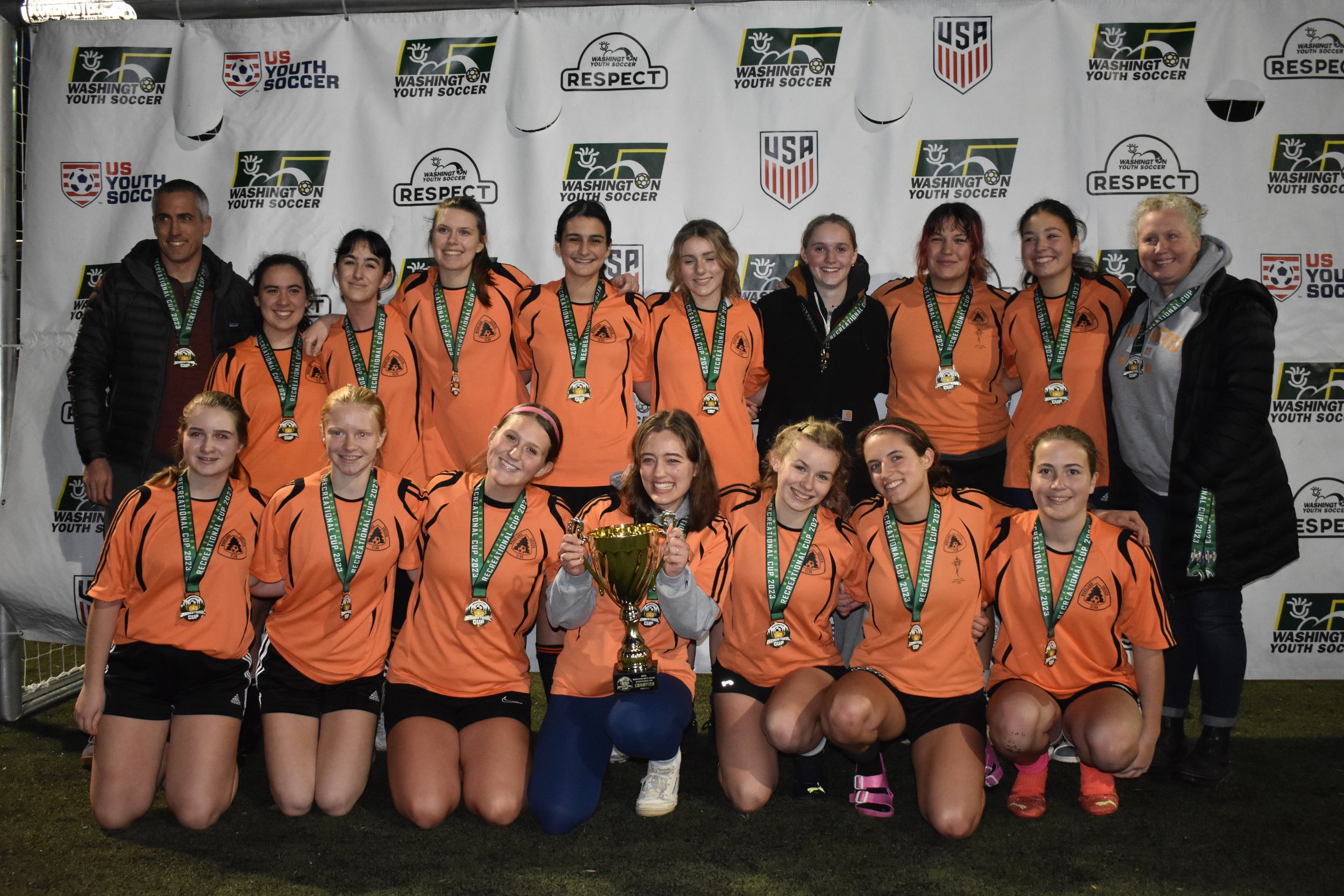
The Woodland Swarmettes in December 2023, after winning the GU19 WYS Recreational Cup (photo courtesy of Rebecca Wynkoop)
Supporting this 12-year endeavor was volunteer coach Rebecca Wynkoop. Rebecca was recently named as one of 36 regional Coaches of the Year by Positive Coaching Alliance, the only coach in Washington state to receive this honor. We recently got the chance to sit down with Rebecca and talk about her time with the Woodland Swarmettes and what coaching means to her.
In it for each other
After losing in two separate SYSA City Tournament finals, the Swarmettes's State Cup win this past December was even sweeter. This was the first year that the team entered the State Cup tournament, Rebecca said. "The girls were really hungry. We worked super hard to stay together during Covid (we were doing clinics and practices) and then we came back after Covid fired up and ready to go. Somewhere around late elementary school or middle school, the girls had made a pact to stay together until they graduated high school. The pact was THEIR thing, not mine. The pact was so strong that when one of our players tore her ACL playing another sport, she was so devastated that she couldn't come back and play the final season that she went out of her way to do all the paperwork to get officially signed on to be an assistant coach so that she could be with the team."
Rebecca has been coaching the Swarmettes since they came together at age 5 to play U6 soccer for Woodland Soccer Club. "It was easy for me to sign up to coach my daughter's team at that time because I had already coached my son's team for 3 years, so I knew how things worked," said Rebecca. Because Woodland is a neighborhood club, all of the players lived very close to each other at that time which really helped create a strong base of community right from the start.
"This team was very much a neighborhood team, 3 of the girls still live very close to each other today."

Rebecca with her daughter (photo courtesy of Rebecca Wynkoop)
During the early years the team grew and changed. Players left to pursue new endeavors or focus on their main sport, and new players joined and helped the team expand into the group they have today. Of the original seven players on the U6 Woodland Swarmettes, four still remain and were a part of the group lifting the State Cup trophy in December. Along the way, it wasn't always easy to stay together. Some years were harder than others, particularity once they hit high school. "I remember a year when we had a roster of 22 and were only getting like 11 at each practice. I went to the girls and I said hey, I want this to be valuable to YOU, this isn't for me it's for YOU. What do you want to do? They decided to continue on, invoking their pact, and really committed to showing up for each other. They trusted each other that even if someone couldn't make it to practice or a game, they knew it must be for a really good reason and they had each others backs in this."
Cultivating a positive experience
As her time coaching the Woodland Swarmettes comes to a close, with this upcoming Spring Soccer season being their last, Rebecca has reflected back and really been able to hone in on what pieces helped make the whole experience so great. She says that one of the best things she did right from the beginning, that ended up being key, was that she made it a priority to set a good foundation of values and put them out there for everyone to see.
"My advice to other parents thinking about volunteer coaching, figure out what your values are and communicate that as early as possible to both players and parents."
For Rebecca, love of the game and having fun had to be the main priorities, no questions asked. "As a coach, if you are able and willing to communicate your values with families, that will help create an environment that is very easy to coach in. Early on with the Swarmettes, I was really intentional about communicating this message with parents: Play hard, run fast, have fun. I did this because as parents on the same team, we should all have the same goals. We want our kids to love the game and have fun and we needed to be able to support each other and have the expectations that we were all here for the same things."
When it comes to recreational soccer, it takes a whole group of people to make the season happen. And each role is of equal importance. "My message with the parents was always, let the coaches take care of the soccer and your role is to cheer them on. Everything about this is about that kid and we are just all here to soak it up and make it as positive as possible. That's it, that's our only goal." Setting this tone gave Rebecca direction and created a positive experience for everyone involved. It's much easier to navigate things when you have a foundation, a compass, and when everyone knows what you stand for up front.
In regards to keeping things positive on the coaching side, Rebecca's advice is to "find someone to coach with you, it makes so much of a difference because you don't feel like you are carrying the weight on your own. Having other parents help is something I would never hesitate to do, it makes coaching much more do-able and enjoyable, which overall makes it a more positive experience."
Growing together
"Playing in League Washington this final season really gave us the opportunity to blossom. The new environment gave the players more of a competitive fire and helped strengthen their commitment to each other. It gave them a space to see how far they had come, to see what they could do." Regardless of what was going on in their lives, Rebecca said this team showed up and played for each other all season. Example, the last game of the fall regular season they had their most competitive match - and it just so happened that they were down 3 players. Both of the girls who were rocks at center back were unable to be there, and the players that filled in absolutely played their hearts out - a direct example of how strongly these girls felt about the collective.
"These girls just show up and play for each other, not for themselves, but for each other, for the team."
From Rebecca's standpoint, this year was such a great culmination of the Swarmettes journey because this was the year that she didn't see herself as coaching and leading this team, this was the year that THEY led. This was the year that they took complete ownership, had each other backs, and just really leaned into and owned the unbreakable bond that they had been building amongst themselves all of these years.
"The most valuable part of this entire experience was being able to allow the girls to grow into a team that we were a part of together. I wasn't leading them this year, it was THEIR team this year. I was subbing and communicating yes, managing you might say, but to be able to let this be THEIR season, and for them to have so much success in that endeavor was just amazing to witness. They did this together, I was just there to bring the soccer balls. And that gives me so much joy."
Ironically, it seems as if Rebecca's Coach of the Year award came in a year that she did the least coaching, but a year that was the culmination of the amazing culture she had intentionally cultivated for over a decade that laid the groundwork for them to coach themselves to a championship. Which is very, very deserving of the Positive Coaching Alliance's recognition:
"Together we are making sure that all kids have access to the life-changing experiences of sports—the sense of pride and confidence in belonging, the courage to stretch and grow, the resilience to navigate life’s challenges, and the ambition to pursue their dreams." - Positive Coaching Alliance
Thank you Rebecca!
Lopsided score? Here's how to keep it fun & exhibit good sportsmanship
Recreational soccer is a game that is available to everyone, regardless of skill level. The mental, physical and emotional benefits of participating in sport are extremely high, so getting kids engaged and wanting to play is the biggest reason why recreational soccer leagues are so important. Good sportsmanship and camaraderie play a huge role in creating an environment that helps make a player's experience in recreational soccer good - and THESE are the things that ultimately drive them to keep playing and stay in the game. Not the wins.
One of the most important moments that we can show great sportsmanship and stay aligned with the values of recreational soccer, is when our team starts to go up by a number of goals. Rather than allowing the scoreline to get really lopsided, we can use this moment as a fantastic opportunity to not only show good sportsmanship, but also to expand and grow, both as players and as people.
Welcome to our SYSA educational series! This series is where we provide advice, guidance and useful tools for parents, coaches and volunteers within the Seattle Youth Soccer Association.
Recreational youth soccer differs from competitive youth soccer in that it has different goals and different benefits. One of the biggest differences with recreational soccer is that, regardless of the result, the simple experience of JUST PLAYING is the actual win.

Image credit: Canva Pro
It’s important to point out that there is nothing wrong with being competitive and wanting to win - it's what we strive to do when we get out on the field. It motivates us to work hard and put in effort. Winning is fun and it gives teams a clear goal to work towards. However, when winning becomes the only valued objective, it is easy to lose sight of the other important aspects of recreational soccer.
Sportsmanship is at the heart of recreational soccer
At the youngest ages, recreational soccer exists to introduce players to the game and is primarily an instructional experience. As players grow, the recreational game starts to cultivate a community that becomes very valuable and allows players to fully experience the sport for what it is: a fun game played with friends that gets you outdoors and keeps you active.
Recreational soccer is a game that is available to everyone, regardless of skill level. The mental, physical and emotional benefits of participating in sport are extremely high, so getting kids engaged and wanting to play is the biggest reason why recreational soccer leagues are so important. Good sportsmanship and camaraderie play a huge role in creating an environment that helps make a player's experience in recreational soccer good - and THESE are the things that ultimately drive them to keep playing and stay in the game. Not the wins.
Good sportsmanship isn't just shaking hands at the end of the game, its about how you show up, as a team and as an individual, at each and every moment (the easy ones and the hard ones) throughout the entire game, the entire season.
One of the most important moments that we can show great sportsmanship and stay aligned with the values of recreational soccer, is when our team starts to go up by a number of goals. Rather than allowing the scoreline to get really lopsided, we can use this moment as a fantastic opportunity to not only show good sportsmanship, but also to expand and grow, both as players and as people.
Tools for coaches to use when the score becomes lopsided
In recreational league play, its not uncommon for a team to find themselves up a large number of goals on the other team. While every effort is made by league administrators to accurately place teams in divisions before scheduling games each fall, it is an imperfect science and mismatches can occur.
If you find yourself in this position as a coach, here is what we recommend: when your team starts to get ahead, choose to see it as an opportunity to help players learn how to define success in regards to other things besides just winning and scoring. For example, what things can we focus on here that will help us move toward being the team that we want to be? Shooting from distance? Only shots allowed from outside the box! Ball movement? Require a certain number of passes, stringed together, before taking a shot! Having well-rounded players? Switch things up, move people around! Etc.
Want to be a team with really fast speed of play? OK - define your success right now by THAT! What sort of things can we do to play faster and make quicker decisions here? Keep our head on a swivel, gather information, give our teammates information about what we see, make our decision about what's next before we receive the ball, etc. Let's focus on THAT right now, and let's define our success by THAT today. Other options include removing a player from the stronger team, or adding a player to the weaker team.
To help ensure that your team is prepared to make this shift inside of a moment where they take a big lead, come up with a plan beforehand so that you can easily put it into action when the score starts to get lopsided. If you have a plan and are prepared to present it to your players as a fun opportunity, they WILL get excited about this and see the new objective as a challenge, and another way to 'win-the-day'.
Protecting the integrity and values of recreational soccer
Many times when lopsided scores happen in games, its simply because coaches and players alike got excited and caught up in the moment and didn't have the awareness to regulate what was happening. But even though it's not done intentionally, it still has potential to undermine the values of recreational soccer.
The recreational game is one of the only places in youth soccer where kids can play free of the pressure, expectations and win-at-all-costs-mentality that have become associated with the game in competitive environments. Soccer is an amazing sport and everyone deserves to be able to enjoy it. What makes the recreational game so unique and special is that it provides this opportunity to kids of all skill levels and all walks of life - an opportunity which is extremely beneficial for both their mental and physical health. Which is exactly why protecting the integrity and values of the recreational game is so important, because it KEEPS KIDS PLAYING and benefiting from the beautiful game.
Why I volunteer to coach recreational youth soccer
Coaching recreational soccer is less about what you know about the game and more about how much you care and how you show up for the kids. And because of this, it is something that is near and dear to the hearts of many members of our SYSA community and keeps them coming back year after year.
Here we hear from two SYSA volunteer coaches that love the recreational game and this soccer community for exactly what it is: a chance for kids to be active, learn life skills, have fun with their friends and enjoy the game without the pressure or expectations that have too often become associated with youth sports. If you have ever considered coaching a recreational soccer team, this post is for you…
Coaching recreational soccer is less about what you know about the game and more about how much you care and how you show up for the kids. And because of this, it is something that is near and dear to the hearts of many members of our SYSA community and keeps them coming back year after year.
Here we hear from two SYSA volunteer coaches that love the recreational game and this soccer community for exactly what it is: a chance for kids to be active, learn life skills, have fun with their friends and enjoy the game without the pressure or expectations that have too often become associated with youth sports. If you have ever considered coaching a recreational soccer team, this post is for you…

Coach Jenna & the U6 Shorelake Monster Trucks
“The joy the kids have at practice and games is priceless. It is pure and wonderful and we all need more of that in our lives.”
What do you love most about coaching recreational soccer?
Coach Aaron Peterson, LCSC U12 girls
I played rec soccer growing up, and always had an appreciation for the less structured approach to the sport. I am not particularly interested in the sports where people are afraid to lose, and/or where there's some perception that perfect is possible. Even the playing field in soccer can be bumpy, so it can be a great means of teaching kids that it's OK to make mistakes, and that that's where the learning happens.
On our team a key concept has always been "if you're not making mistakes, you're not trying". As they get older I may modify that a bit, but the main concept will always apply. It's just soccer. Go out, have fun, learn, grow. Repeat. I tend to look at soccer a bit more philosophically than I might have when I was younger, and I'd like to think that this has been a good thing for the players.
Coach Jenna Hulse, Shorelake U6 co-ed
The joy the kids have at practice and games is priceless. It is pure and wonderful and we all need more of that in our lives. They are great sports because, at this young age, they don't know how else to be. They skip and run and are just happy to kick the ball, even if it's in the wrong direction (but that happened a lot less than I would have expected). And seeing how proud, excited, supportive and just happy the families are on the sidelines makes coaching 100% worth it.
I started coaching my daughter's U-5 team last fall, her first official soccer team, and I am SO thankful I did. Some of my greatest memories from my childhood revolve around soccer and the Shorelake teams I played on with my dad as coach. He still has our soccer pictures from the early 90's hanging in his office - the Shorelake Hot Shotz! And now, he's coaching my daughter and her Shorelake Monster Truck teammates with me! It's hard to say who has the most fun at practice - the kids, me or my dad! Getting to know all of the kids and their families, who will be our friends for decades to come, is another huge benefit to coaching.
Did you have any reservations or worries when you first started coaching? What were they and how do you feel about these things now?
Coach Aaron Peterson, LCSC U12 girls
I think I was a bit concerned that I wouldn't have the bandwidth to coach, or that I wouldn't be able to add much to the process. When my daughter Amelia's first coach left, I mostly just stepped in because everybody else stepped back.
Coaching youth soccer was one of the best decisions I've ever made. I one time had a player who was feeling down because their conditioning wasn't equal to some of the other players. I looked at her when she was taking a break and said something to the effect of: "I know this is hard for you, but I'm proud of you. Anybody can do the easy stuff. It's easy to do the easy stuff. But you're doing the hard stuff, and that takes grit and character and you should be proud of yourself."
What other venue do you have the chance to help kids develop life skills like this? Life can be hard. Everybody is eventually going to have some bad and very bad days. What you teach them may be what helps them to get through the tough times a bit more gracefully.
Coach Jenna Hulse, Shorelake U6 co-ed
My biggest worry/reservation was wanting to be sure I'm teaching the kids in the right way...I'm not the most technical coach, and when they get older, I might worry about that more, but right now, what's most important when coaching such young players is focusing on keeping it fun and positive, and anyone can do that!
Yes I want them to pass with the inside of their foot, and not their toes, and we do talk about that, but they leave every practice and game smiling and that's what matters at this point. They cheer for each other, they pass to each other, they laugh and have fun. I want to build great teammates and team players, so hopefully when the time comes to really start focusing on more technique, they will have the sportsmanship thing down!
Are you planning to coach again this fall season and why?
Coach Aaron Peterson, LCSC U12 girls
Yes! I have had a pretty broad range of athletic abilities on my team, and it has been my great pleasure to try to find ways to help each player grow in their own way. It's possible that I could have used more high intensity drills (e.g. lots of running), but I have sometimes had players who weren't sure they were athletes yet, and I needed to find ways for them to grow their abilities without setting them up for failure.
This past spring season, some of the kids who maybe thought they might not be athletes have now decided that they love the game and are even searching out soccer activities on their own time. At the same time, some of the more athletic players deserve to be challenged as well, and this is where it is important to have fun, engaging drills/games during practice so that nobody is getting less than their share of growth opportunities.
To answer the specific question, we've helped the players start to develop some new skills over the fall/spring seasons, and I'm excited for them to keep applying these and watching them grow even more in the fall season.
Coach Jenna Hulse, Shorelake U6 co-ed
I can't imagine not coaching the Monster Trucks again. We have four of our six original kids returning (the others live a bit farther away), and several friends of our teammates signed up for the fall already. All of our parents are super supportive, kind and thankful, so coaching their kids is a treat for me!
What advice would you offer to someone who is interested in coaching but is maybe on the fence?
Coach Aaron Peterson, LCSC U12 girls
First, as long as the kids are challenged and having fun you can't go wrong. Don't be afraid to be a bit goofy if you think it adds positive energy to a drill/game in practice. Second, get the kids as many touches on the ball as possible. Search for something like "most fun kids soccer drills", then pick a couple that appeal to you, and will help the kids keep moving while picking up skills.
Also, you don't have to do it alone. There is often at least one other parent who is willing to help out as a co-coach or even with things like substitutions or covering for vacations.
Finally, and possibly most important. WSU football announcer Bob Robertson used to say "Always be a good sport. Be a good sport All Ways." That second statement has a ton of wisdom in it that applies far beyond the soccer field; how to win AND lose gracefully, how to encourage teammates instead of criticize, how to keep going when something is difficult, etc. If you have any interest in helping kids to learn the importance of the 2nd statement, while having a lot of fun, you should definitely consider coaching.
Coach Jenna Hulse, Shorelake U6 co-ed
I don't think you'll regret trying, but you really might regret not trying, so just DO IT! As long as you enjoy being around kids, and want to teach them to be kind, positive, hard working and honest out on the field/in life, you can make a positive impact on the life of MANY kids by coaching.
Also...when they are this young, we are at all the practices and games anyway, so it's not that much bigger of a commitment. It's worth it! And worst case, if you don't love it, you can say you tried and be that much more supportive of your child's future coaches. You'll certainly make some great memories with your kiddo!
People of SYSA: Jeff Scott, McGilvra Youth Soccer Club President
Recreational soccer in Seattle is made possible for thousands of kids each year through the dedication and commitment of volunteers like Jeff Scott. We recently sat down with outgoing McGilvra Youth Soccer Club President to talk about the 9 years he spent with the club. Here's our conversation with Jeff:
Welcome to our 'People of SYSA' series! This series is where we talk with players, coaches, administrators, parents, referees and volunteers from all across SYSA and learn a little bit about them and why they love being a part of Seattle Youth Soccer Association.
Recreational soccer in Seattle is made possible for thousands of kids each year through the dedication and commitment of volunteers like Jeff Scott. We recently sat down with outgoing McGilvra Youth Soccer Club President to talk about the 9 years he spent with the club. Here's our conversation with Jeff:

Photos courtesy of Jeff Scott
Getting involved with SYSA
Jeff first got involved with McGilvra Youth Soccer in 2014. Jeff, who's played the sport since he was a kid, and his wife Sabrina, who is from Brazil and grew up around soccer, had been recently throwing around ideas for how to get involved in their community. When their daughter expressed interest in wanting to play soccer, the pieces just came together. They decided they would co-coach their daughter's U6 soccer team because they knew it would be something that they would enjoy doing together.
At about the same time that they volunteered to coach, Jeff learned that McGilvra's current president was looking to finish up his time with the club. Jeff was interested, and upon meeting with the outgoing president and then also realizing that he already knew half the leadership (the treasurer and the club's registrar were both friends of his) he volunteered to step into the role.
It's ALL about community
Fast forward 9 years later, and Jeff has nothing but good things to say about the entire experience. Both roles, coach and President. "We have coached our daughter's team, the Thundercats, for 9 years now (minus a year in the middle that my daughter tried select) and honestly it's been amazing. Coaching with my wife and coaching our daughter has been awesome, it's been the most important thing. Getting to know all of the kids has also been amazing. This group has stayed together and are all still friends because of this rec soccer team. It's also been great getting to know the parents and all that. All of this is what community soccer is all about," says Jeff.
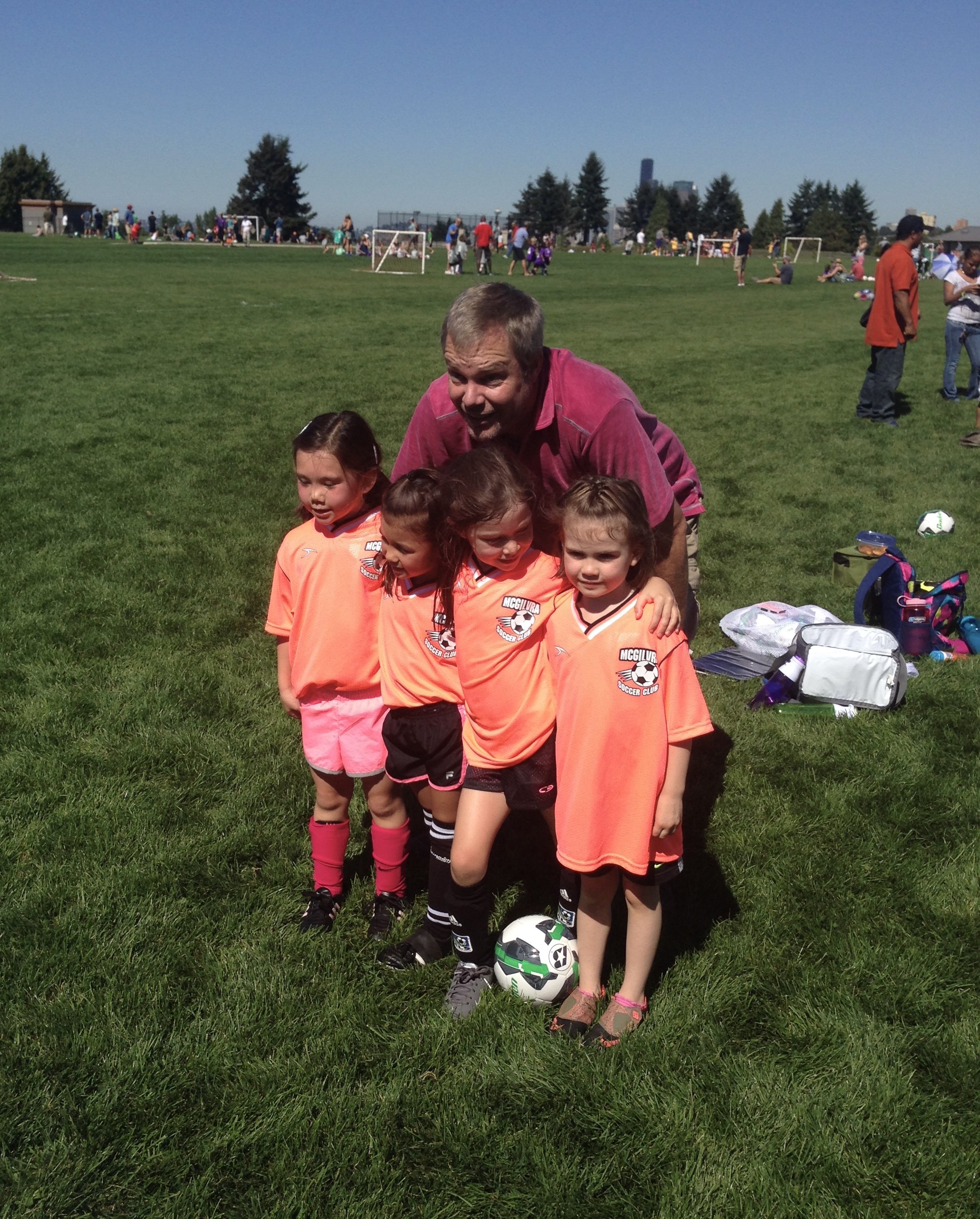
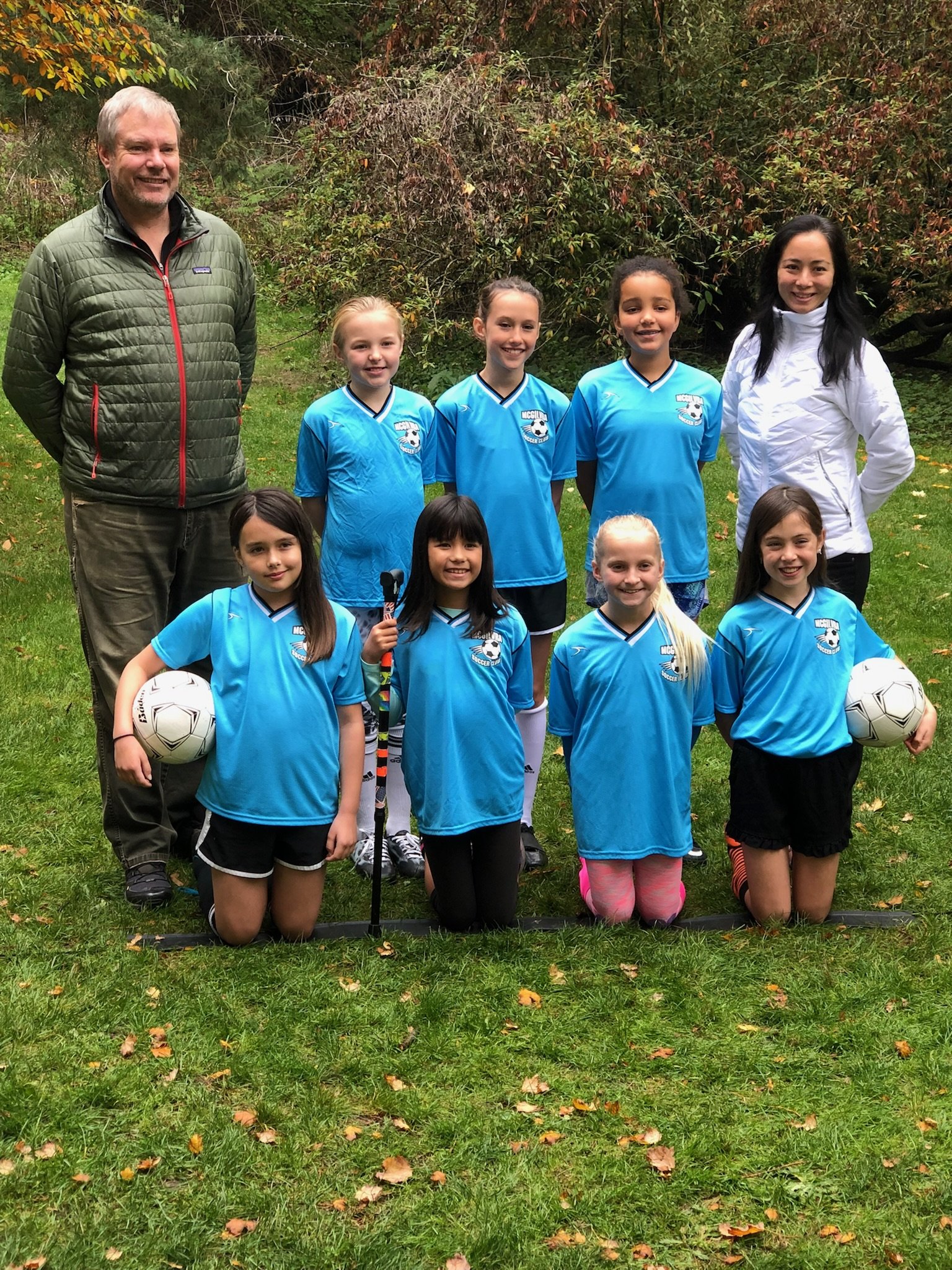
Being a part of McGilvra Soccer Club all these years "has been a great way to connect WITH the community and connect WITHIN the community" - Jeff Scott
McGilvra is a club of about 75 teams and is run effectively and efficiently by a small group of dedicated, hardworking individuals. "We have a small board at McGilvra, 4-5 people maybe. I knew it was going to be a commitment when I decided to accept the role of president, but once I started digging in to the history of the club and chatting with the community about the value it brings to the neighborhoods, I knew it was going to be worth it and it has been. It's an important and valued piece in the puzzle of our community and that value has become even more apparent to me over the years," says Jeff
McGilvra Soccer Club is a big deal, Jeff says, because it bring so much value to the community and harps back to an earlier time when everything was about connection to others in the area that you live. "It provides an experience that just doesn't exist in the world anymore. Community soccer is one of the last bastions of the old school community atmosphere. It's just a different world for kids these days," says Jeff.
Camaraderie, teamwork and friendship
When asked about the value of his 9 years with McGilvra, Jeff further leans into this idea and says that being a part of something that's centered around helping kids have this community experience has been the most valuable thing he will take with him. He's especially loved seeing the friendships and togetherness that the kids get to be a part of, coming back year after year to people they've been friends with since they were 5 years old.
"For kids to be able to learn this idea of camaraderie and teamwork and friendship and the value of all that, we can't lose this stuff in the world! It's less and less of this that we have out there, fewer and fewer opportunities." - Jeff Scott
Jeff gives an example. His daughter and his wife went down to Brazil for a semester of school recently. While his daughter was attending school at the international school there, she played soccer for the middle school team and then got invited to travel with the high school team to some bigger events. "When I talked to her about this, she was happy for the opportunity, but she said to me, Dad - it's been good but I'd much rather play with the Thundercats. The camaraderie is just not there with this team and I miss playing with my friends."
"To her, that idea of being able to just play with her friends, that is what soccer means to her," recalls Jeff. "And being a part of that idea, that environment that created that, is what I value most."
McGilvra moving forward
"Covid was not fun," says Jeff, when asked about when he knew it was time to move on. In fact, it was his least favorite part because of how difficult it was. After leading the club through that period, and staying on board long enough to get things back up and running, Jeff knew it was time to part ways. His daughter and her teammates are also headed into high school now, so it seemed a natural transition point to leave McGilvra in the next set of hands.
"McGilvra is in a good place right now, and that fresh excitement for soccer and interaction after the pandemic, that's what we kind of rode to find a replacement," says Jeff. Enter Nick Tchemitcheff, McGilvra Youth Soccer Club's new president. "McGilvra Soccer Club has been such a big part of my life, and I want someone else to be able to continue on and have that experience as well. Nick has everything he needs and is ready to lead."
After navigating the pandemic and coming out of that intact, the club is strong. Jeff believes that McGilvra Soccer Club is well positioned going forward due in big part to the collective dedication of everyone involved.
"A special thanks to Anne Bare and all the dedicated volunteer board members/coaches over the years. Without them, recreational community soccer wouldn’t exist." - Jeff Scott
"McGilvra Soccer Club is ready to build upon the framework that is already there and take things to the next level. The club is ready to expand into some of the things we haven't been able to offer before, and ramp up the community-building aspect to further integrate into new areas. I'm excited to see where they take things," says Jeff.
Thank you Jeff!
Jeff - SYSA is extremely appreciative of all of the time, energy and expertise that you have so freely given to this soccer community over the years. We are grateful for all of your work helping to support not just McGilvra, but the association and the other neighborhood clubs in the city as well. Thank you so much for your years of service, leadership and kindness.
People of SYSA: Jonathan Smith, Capitol Hill Field Scheduler
For this edition of People of SYSA, we spoke with Jonathan Smith - Capitol Hill Soccer Club's longest running volunteer. Jonathan has been helping Capitol Hill soccer players since the 1990's! During that time he has seen a lot of change and a lot of people come and go (including his son who started playing when he was 6 and is now in his 30s) - but through it all, Jonathan has steadfastly continued donating his time and expertise because he believes wholeheartedly that volunteering is important work. Here's more from our conversation with Jonathan:
Welcome to our 'People of SYSA' series! This series is where we talk with players, coaches, administrators, parents, referees and volunteers from all across SYSA and learn a little bit about them and why they love being a part of Seattle Youth Soccer Association.
There are 12 recreational soccer clubs that make up SYSA, each one volunteer operated. From board members to coaches to MOD program directors and field schedulers, volunteerism is the foundation upon which these neighborhood soccer clubs are built. Without these volunteers, kids in Seattle would have less opportunity to get outside, participate in a team sport, and play the beautiful game.

For this edition of People of SYSA, we spoke with Jonathan Smith - Capitol Hill Soccer Club's longest running volunteer. Jonathan has been helping Capitol Hill soccer players since the 1990's! During that time he has seen a lot of change and a lot of people come and go (including his son who started playing when he was 6 and is now in his 30s) - but through it all, Jonathan has steadfastly continued donating his time and expertise because he believes wholeheartedly that volunteering is important work.
Here's more from our conversation with Jonathan:
Getting involved with youth soccer in Seattle
Jonathan's story starts as many parent volunteers does, offering to help out as a parent coach when his son started playing soccer at the young age of 6. At that point the program for the younger kids was run by Seattle Parks. Around 1998, when Jonathan's son was old enough to play with Capitol Hill Soccer Club, they made the switch and Jonathan continued on as a volunteer coach. Despite not having a soccer background or really knowing much about the game, he gladly gave his time to the team and to the organization.
Within the first few years of being at Capitol Hill, Jonathan shifted into more of an organizer and manager role with his son's team, which included helping as a parent referee at games and ensuring players had rides to games and practices. "There were a lot more people working at the club level when I first started," says Jonathan, which was replicated in how his son's team worked. "Some parents did the coaching, others stepped in to do the organizing and managing, and yet others moved to help with other logistics and fun things. It was great."
Volunteering is all about people working together
The way that Jonathan's son's team operated in those early years is a great example of effective, community volunteerism: a collective group effort where everyone does their small part and no one person has to carry the whole of the load.
"Some people like to do technical things, some people like to be organizers, some people are really cut out for coaching and working directly with the kids. I like doing the support pieces, things that I am good at. Volunteering does take time, but if enough people get together and take little pieces of it, the amount of time that each person needs to put in is modest. Volunteering is all about people working together," says Jonathan.
"When there is co-leadership and a facilitated overall group effort, no one feels too overwhelmed or overloaded. Too often the negative side of volunteering is when people have to take on too much, while already having too much on their plate to start."
When recreational youth soccer teams are run this way, everyone feels like they are a part of the collective effort. The magic of this is that volunteering becomes easier and less work because others are also contributing. This also allows for everyone to be able to do something that they enjoy doing or are good at, instead of being thrown into a role. Jonathan's advice to other parents is to "get involved in the overall effort, split things into small pieces, find out what you are good at and do your small part."
Field scheduling through the years
After helping out with coaching and management tasks on his son' team for several years, Jonathan switched gears and started helping Capitol Hill Soccer Club with organizing and coordinating the fields and scheduling team practices. This was the type of work that Jonathan really enjoyed so he was happy to step up. At that time there was another volunteer doing it as well (again, sharing the load) and they worked together for a number of years before Jonathan took on the role fully when the other left the organization.
Jonathan has now been Capitol Hill's field scheduler for over 20 years. When asked about the evolution of 'field scheduling' over the years, he dove into a quick history. "Some Microsoft folks had written us some software to use in the early days. We used that on the club's web site to publish available practice field info, then email and phone to request, confirm and record practice field assignments. Somewhere in the 2005-2008 range we switched over to our current way of doing things with spreadsheets. "
"The forms and spreadsheets are more involved and more sophisticated now. Everything used to just to get emailed out, now we can just post a form and everyone has access. It does take some time to organize the fields and it is intense for a few weeks, but I really enjoy it," says Jonathan.
Still at it, all these years later
Volunteering is an important part of Jonathan's life, and his family's life as well. Jonathan's son played in Capitol Hill Soccer Club all the way up through high school, through U19, but then stayed involved and coached a bit before going off to college. He even assistant coached with Seattle United for awhile as well.
Jonathan also volunteers at the Arboretum. "It's a special place for me, and a fantastic place to work," he says.
"I just like to volunteer. The fields job with Capitol Hill, it's easy to do because I know it so well, so why not keep doing it?," says Jonathan. "People ask me why don't you quit? Your son has been done playing for 10+ years." He replies," I tend to be a person of habit and I like volunteering. I get to talk to people and that's nice. I feel like I'm appreciated and I enjoy helping out. Plus, I retired in 2013 so now the time crunch isn't so bad."
It's become a piece of Jonathan over the years, being involved. "Volunteering is my social outlet. I like volunteering and being involved in socially responsible things that make a difference. Along with this, I also did Cub Scouts for a number of years and spent some time helping at environmental organizations after college. And now the Arboretum. I just like to be involved."
A note of appreciation
As we close out our conversation with Jonathan, we wanted to give Capitol Hill Soccer Club a moment to express their appreciation for Jonathan's volunteer service over the years:
"Jonathan is our longest volunteer. It has been well over a decade that he has had a child playing youth soccer but he continues to help and stay involved. Without his dedication our teams would not be able to practice each fall. Even when his wife was battling breast cancer a few years ago, Jonathan found time to organize our practice schedule. Jonathan is dedicated, patient, understanding and invaluable to our families. He is the bedrock of our club!
Thank you Jonathan for a job well done! Our club is incredibly fortunate to have a volunteer like you!"
- Shelly Chinn, President, Capitol Hill Soccer Club
Thank you so much Jonathan, from everyone here at Seattle Youth Soccer Association as well! It is volunteers like you that make SYSA what it is.
People of SYSA: Christopher Jones, LVR Volunteer Soccer Coach
Here at SYSA, we recently had the opportunity to talk with Chris Jones, a volunteer soccer coach with LVR Soccer Club. Chris, who goes by CJ, is the head coach of the LVR Sounders Girls U16 team, a team he has been coaching since the girls were in kindergarten. Keeping a group of high school girls involved in the game at the recreational level is a hard thing to do, as girls tend to drop out of sports at a high rate once they hit their middle school years. But CJ has done something special. He has created a culture of community and inclusion that has kept players and their families coming back year after year. He has helped create a safe space for the girls to be themselves which has made a massive impact on the lives of these young women. Here's more from our conversation with CJ:
Welcome to our 'People of SYSA' series! This series is where we talk with players, coaches, administrators, parents, referees and volunteers from all across SYSA and learn a little bit about them and why they love being a part of Seattle Youth Soccer Association.
Here at SYSA, we recently had the opportunity to talk with Chris Jones, a volunteer soccer coach with LVR Soccer Club. Chris, who goes by CJ, is the head coach of the LVR Sounders Girls U16 team, a team he has been coaching since the girls were in kindergarten.

Photos courtesy of Chris Jones
Keeping a group of high school girls involved in the game at the recreational level is a hard thing to do, as girls tend to drop out of sports at a high rate once they hit their middle school years. But CJ has done something special. He has created a culture of community and inclusion that has kept players and their families coming back year after year. He has helped create a safe space for the girls to be themselves which has made a massive impact on the lives of these young women.
Here's more from our conversation with CJ:
GETTING INVOLVED WITH SYSA
Both of CJ's daughters started playing soccer when they were really young. They started out in Lake City Soccer Club playing on coed teams and then moved to LVR, which is when CJ first decided to volunteer to coach. The team has been playing both fall and spring season every year since then.
"After all these years together, all of the girls are so close and understand each other so well on the soccer field. They go to different schools yes, but man when they get together on the field - and they know each others strengths and weaknesses - they just know how to bring each other up and support their teammates," says CJ.
KEEPING SOCCER FUN
CJ, who is a developmental psychologist by trade, was reading an article when his daughter was about 6 or 7 that said that the number one reason girls stopped playing sports as they got older was because it stopped being fun. "So I decided early on that fun was going to be my number one focus," says CJ. "Some of our players that have moved on to select soccer still play with us to have fun and keep that enjoyment. Some girls do all three (high school, select and LVR). What is special about our team is that they all have fun out there, they all have a good time together and there's no judgement."
"To see their love and enjoyment and appreciation for the game evolve and grow over the years has just been amazing. They have all evolved and grown so much in terms of what soccer means to them and in terms of what this community means to them as well, " CJ says. And a big part of that is that, as a group, they HAVE been able to keep it fun, and keep it pressure and expectation free.
A SAFE, SUPPORTIVE COMMUNITY
CJ says that even though their focus is keeping soccer fun, they've still had their hiccups and their ups and downs over the years, as is expected with any group of young adults growing and evolving together. He's had his fair share of 1:1 conversations with players, but his favorite coaching tactic when it comes to overcoming obstacles is to have them take on leadership roles and problem solve together. As a team. As a community.
For example, in the first season back after Covid-19, the team was having a difficult time forming. The girls were considering not returning to play. The world was in the middle of COVID and that was a big psychological hurdle that they were each having to navigate in their own lives. It was a confusing time for everyone and the lack of social exposure and uncertainty over the past year had them hesitating because they didn't know what the future would hold. CJ didn't want to make the decision for the team though, he wanted THEM to make the choice about whether they would go on or disband. "I think in the end, they, as a group, came to the realization that they all wanted to hold on to this small semblance of a community that they had built with each other. It was one of their safe spaces."

Photo courtesy of Chris Jones
By letting them be involved in this decision, letting them come up with a plan for how to keep the team together, they felt ownership, " CJ says. They were more motivated and driven to step up for each other and make this happen because it was THEIR plan. "I want them to feel like they have ownership in the way the Sounders Girls culture evolves. It's their team and I want them to know that," says CJ.
"These days you don't have a sense of community in many environments anymore. But we have that here and it's wonderful. It was really was good during Covid to have this community infrastructure."
CREATING COMMUNITY BEYOND THE FIELD
CJ jokes that sometimes he thinks the parents actually enjoy the community aspect more than the players. "The parents love each other. They hang out outside of soccer. When players are on the fence about playing next season, the parents are always encouraging them to stay because they personally want the community aspect as well."
CJ reflects on all this fondly as he thinks about what keeps him involved and signing up to volunteer to coach year after year. "Recently a parent sent me a memory, from when the girls were like 8, " he says. "At the end of the season, I had given them a notebook with pages with their teammates names at the top of each one and they had to write one thing they liked most about this person, and one thing they respected about this person. We then gave each player all the pages everyone else had written about them. 7 years later the kids are still looking at it. This is what keeps me going and keeps me coming back for more."

Photo courtesy of Chris Jones
THE COACHING EXPERIENCE
We asked CJ a few questions about how he approaches volunteer coaching and what he uniquely brings to his team. Here is what he had to say:
SYSA - Do you have a coaching philosophy? What values are important for you to teach your players when it comes to team culture?
CJ - "Enjoyment of the game, mutual respect for the other team and especially their fellow teammates, and a general focus on health - meaning stretching properly and everything associated with injury prevention."
SYSA - What is your greatest strength as a coach?
CJ - "Humility and humbleness. I'm OK saying I messed up, it creates a safer space for the players. I feel if I can create an environment for them to feel safe, we can really talk about anything. We get into some really deep stuff sometimes and I attribute that to being able to create that safe space."
SYSA - Proud coach moment?
CJ - "The first city tournament that they won, which was in 2016 or maybe 2017? The girls were on fire that day. I said I would do a cartwheel at the end. I wore all professional attire. Yes, I wore a suit to the final game, complete with a soccer bowtie. It was a cold day, everyone was bundled up in Sounders Girls scarves. And the girls they just came out and shined so well as a group and they supported each other. I mean, we had players typically afraid to play goalkeeper making some awesome saves. It was great."
SYSA - Favorite coaching memory?
CJ - "About kindergarten till about 4th grade, I used to have coach-talks with the kids where all the girls were climbing all over me in order to see the coaches board. All of that adoration, that is my favorite memory."
SYSA - Any advice for parents thinking about volunteering to coach?
CJ - "The coaching resources are out there. If what you are worried about is not knowing what to coach or how to coach, it's all out there - and truthfully you don't need any of that to coach, especially not at the younger ages. Just work together with the kids and have fun. If they get the ball in the goal, great. If not, great. As a coach, if you are encouraging the fun, the rewards heap up themselves."
SYSA - Any advice for players thinking about playing rec soccer for the first time?
CJ - "There are very few places in our lives where it is really safe to make mistakes and put yourself out there in a way that you can still feel good about yourself when you do that. Rec soccer is that place. The reward comes from trying, the winning piece isn't as important here."
And to close things out, we asked CJ the all-important question: which pro teams do you follow? "I watch it all! When I'm washing the dishes at night, I prop my phone up on the windowsill and watch all the highlights. Premier League, Bundesliga, MLS, doesn't matter, I love it all. But if I had to pick one team, I would say Barcelona - but the Messi Barcelona years."
Thank you so much CJ for all your years of volunteering and your commitment to the LVR Sounders Girls! SYSA appreciates everything you have done!
People of SYSA: Jay Patrikios & Cassie Martin, Woodland Volunteer Soccer Coaches
Jay Patrikios and Cassie Martin are partners who coach for Woodland Soccer Club. Jay currently coaches their son's U9 team and Cassie, their daughter's U10 team. Recreational soccer is all about the kids having fun and enjoying the game: both Cassie and Jay embody this through and through and it is exactly why they come back each year and continue volunteering their time. They understand the immense value that recreational soccer provides to their kids, and to everyone, in the community. Here's more from our conversation with Cassie and Jay:
Welcome to our 'People of SYSA' series! This series is where we talk with players, coaches, administrators, parents, referees and volunteers from all across SYSA and learn a little bit about them and why they love being a part of Seattle Youth Soccer Association.
Rec soccer in Seattle runs on volunteers. Without volunteers to organize practice fields, do the admin work and coach the teams, thousands of kids would not get the opportunity to play soccer each and every year. In this edition of People of SYSA, we are proud to feature not just ONE of SYSA's amazing volunteer coaches, but TWO of them: and from the same household!
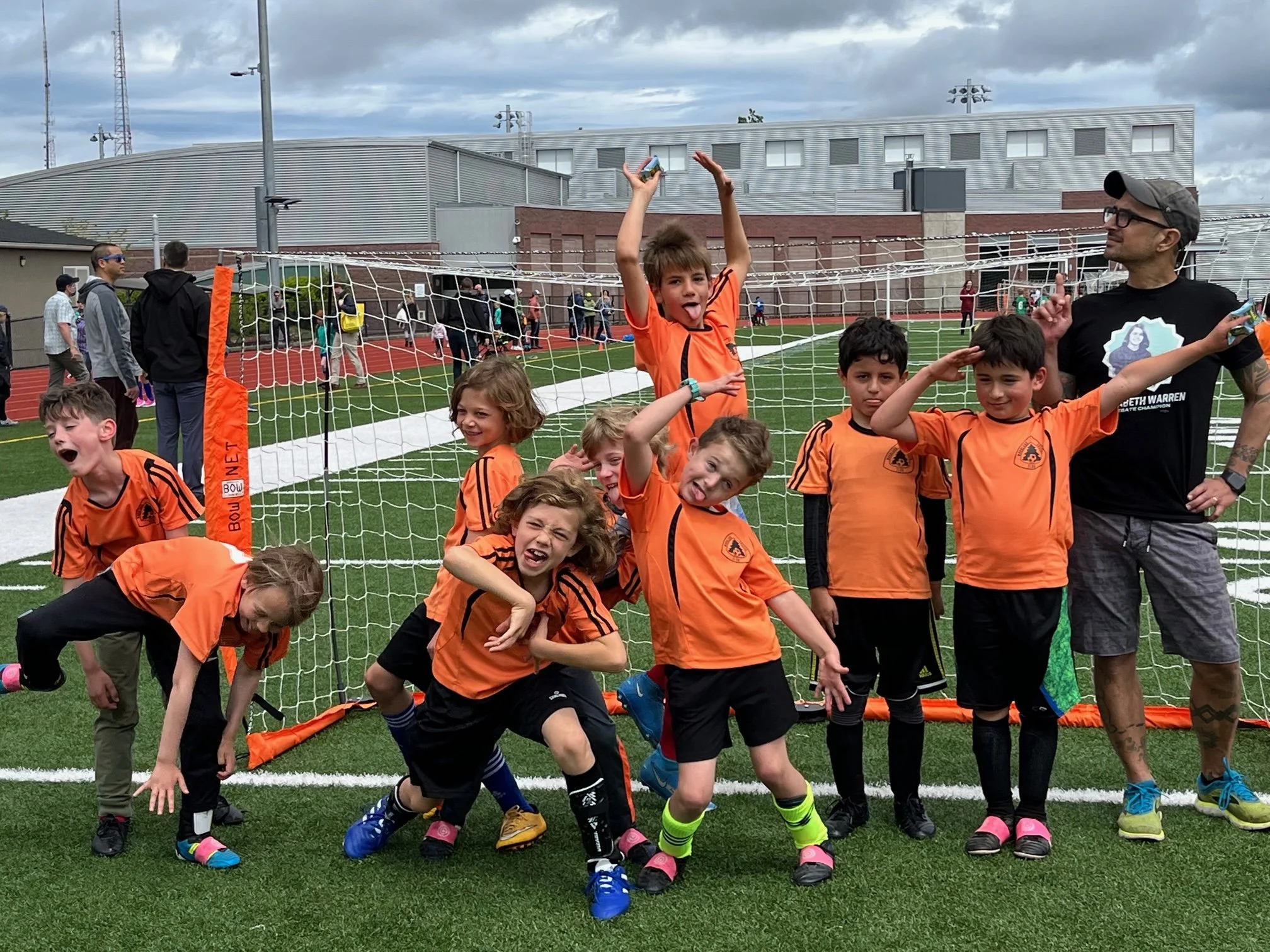
Photos courtesy of Jay Patrikios and Cassie Martin
Jay Patrikios and Cassie Martin are partners who coach for Woodland Soccer Club. Jay currently coaches their son's U9 team and Cassie, their daughter's U10 team. Recreational soccer is all about the kids having fun and enjoying the game: both Cassie and Jay embody this through and through and it is exactly why they come back each year and continue volunteering their time. They understand the immense value that recreational soccer provides to their kids, and to everyone, in the community.
Here's more from our conversation with Cassie and Jay:
GETTING INVOLVED WITH SYSA
Of Jay and Cassie, Cassie is the one that comes from the soccer background. She played all the way up through college, at which point she decided she needed a break from the game. Years later, after seeing the Wallingford neighborhood park full of kids playing soccer, her 6-year old daughter expressed interest. Cassie signed her up to play with Woodland, and signed herself up to coach. "We started out with a group of random kids and now it's a really tight community that we have, 5 years later," says Cassie. Their community extends outside of soccer as well. "One of the parents is a pharmacist and we've done team flu shots. We do stuff like that together. The kids all love one another, it's just been so great."
Jay didn't pick up the coaching mantle until the following season when their son also decided that he wanted to play. He did not have a soccer background like Cassie, but because his son asked him to coach, Jay was happy to do it and enthusiastic about the idea.
THE COMMUNITY ASPECT
When asked about the best part of being involved in the rec soccer world, both Cassie and Jay went straight to the community aspect. "The community part is just really important," says Jay. Looking at his team, 4 years after they started playing together, "the collective is really strong and supportive of each other. The player and parent community is SO strong - we all help each other and it's just been wonderful." Cassie adds how the parents worked hard to kept the kids playing together during Covid and just how healthy that had been for them all to have those relationships during that time.
Extending beyond Woodland, and looking at the SYSA community at large, Jay says it's really awesome how his players will all go a summer camp together, make new friends with other kids from around the city, and then end up playing them during fall league. "The players will remember them and want to go say hi," says Jay. "Community wide, the players remember and make friends with kids from other teams. It's really great."

Photos courtesy of Jay Patrikios and Cassie Martin
Both Jay and Cassie love that team sports have this unique ability to create community. "Team sports can really help you through rough times in life. I see our kids benefiting in so many ways, ways in which you can only get from being on a team," Cassie says. Jay, having been a distance runner and NOT a team sports person growing up, says that now he totally gets it. "I'm actually SEEING it, I am seeing the benefits of the the team stuff, the community stuff. Translating off the field too."
COACHING STYLES
Jay is all about teaching durable skills that translate from soccer to regular life. One of Jay's big things is that he likes having players take leadership of the team. He wants them to feel like the team is THEIR team and that their ideas matter. He incorporates this into his coaching by often asking questions like, "what do YOU think we need to work on?". This approach not only helps the players self-advocate more, but it helps them feel invested in the team and WANT to support their teammates more and work hard for each other.
Cassie also brings in a lot of characteristics into her coaching that are important to the family as a whole. "A big one for me is always be inclusive of everyone," she says. "We really see the kids rallying around each other and finding each other's bright spots. Generosity is another another one: sharing a ball, having a good assist, being generous with your time and your ideas, etc." And last but not least Cassies says, "have fun. Always have fun. Even if you're working hard, you should still be having fun."
Jay fully lives by this when coaching his son's team. "The important thing for my team, is that you've gotta work with their strengths. No rigid discipline, it won't work. Maybe a couple of drills at practice, but then let's scrimmage," he says. "You gotta work with the vibe of the team. And my team, they are wild and fun and they love it."
They both understand that the kids want to play, have fun, make friends and enjoy the game in a relaxed environment with no pressure."Want to know what our team cheer is? Fast Flying Tigers - LET'S HAVE FUN!!!", Cassie says. "After a game, the questions are always 'did you have fun?' and 'did you try your best?', thats it. Never 'did you win?' Rec soccer is so important because of this - it's gotta be all about the fun."
THE BENEFITS OF VOLUNTEER COACHING
Both Cassie and Jay agree that there are a ton of benefits to being a volunteer soccer coach for SYSA. One of the biggest benefits being the added time they get to spend with their son and daughter. "My son asked me to coach his team, and I figure there's a limited amount of time that my kids are going to ask me to do stuff with them. I want to take advantage of this time," says Jay.
Cassie adds, "Coaching is a lot of work, but coaching forces you to stop and do something different with your time. There's something really nice about knowing that you can turn all that stuff off and just focus on the kids."
And for Cassie and Jay as a couple, they have bonded over coaching as well. "It's really cool that we can talk to each other about coaching. It's really nice to bounce ideas off of Cassie that I am considering trying. It's nice to talk to each other about soccer, something that isn't work and isn't parenting and I find it really beneficial. Rec soccer has become a fun aspect for everyone, it creates a fun family dynamic for all four of us."
Thank you so much Jay and Cassie! We here at SYSA appreciate all of the time and dedication you have given to your teams over the years. Rec soccer in Seattle would not be the same without you!
People of SYSA: James Mayton, Mount Baker-Lakewood Volunteer
For this edition of 'People of SYSA' we sat down with James Mayton, a volunteer with Mount Baker-Lakewood Soccer Club. James wears many hats on the admin side of things at MBL. He's the Mod Program Coordinator and Fields Coordinator, and he has recently stepped into the role of Community Outreach Director as well. James is a fantastic example of someone who understands the value of volunteering one's time as it relates to the larger picture of cultivating community and inclusion in the neighborhoods that we live. He values soccer for its ability to be that connecting piece that brings everyone together. Let's dive into our conversation with James:
Welcome to our 'People of SYSA' series! This series is where we talk with players, coaches, administrators, parents, referees and volunteers from all across SYSA and learn a little bit about them and why they love being a part of Seattle Youth Soccer Association.
For this edition of 'People of SYSA' we sat down with James Mayton, a volunteer with Mount Baker-Lakewood Soccer Club. James wears many hats on the admin side of things at MBL. He's the Mod Program Coordinator and Fields Coordinator, and he has recently stepped into the role of Community Outreach Director as well.
James is a fantastic example of someone who understands the value of volunteering one's time as it relates to the larger picture of cultivating community and inclusion in the neighborhoods that we live. He values soccer for its ability to be that connecting piece that brings everyone together.
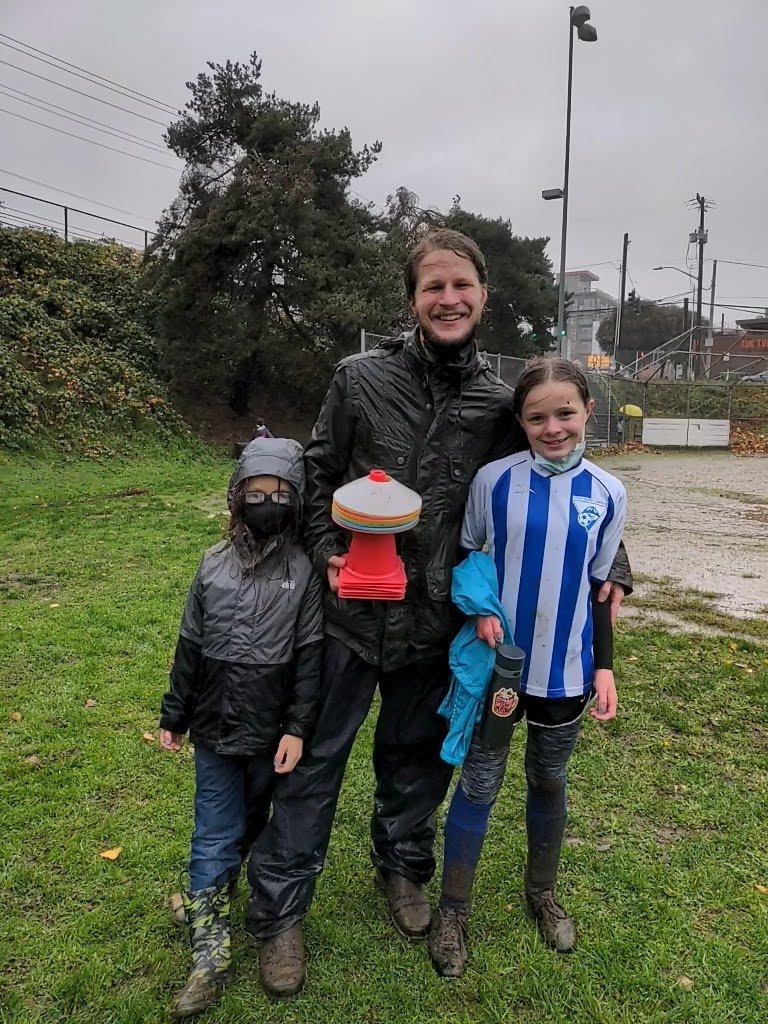

Let's dive into our conversation with James:
GETTING INVOLVED WITH SYSA
James and his family originally got involved with Mount Baker-Lakewood Soccer Club about four years ago when his son expressed interest in playing. James's older daughter then decided to try it out after seeing her brother enjoying it so much. The family has been playing in MBL ever since.
Right away, James wanted to help out. "This is a volunteer driven association so this type of thing is important," he says. He started out by getting involved in the Mod Program as a parent drill leader for his son's U6 team. After that he slowly got more involved in coaching and then eventually moved over to the administrative side of things. James jokes that he "signed up to be Fields Coordinator after realizing that was the only way to know what field my kid would be practicing on." But in all seriousness, James wanted to use his organizational and management skills to benefit the nonprofit organization.
THE VALUE OF VOLUNTEERING
James doesn't look at volunteering as a chore, he looks at it for its value, both in regards to what it brings to his community and to himself personally.
"Putting yourself in a volunteer role where others around you are also really passionate and dedicated has been a really good social support for me through these pandemic years. Being able to support kids who are struggling and have been sheltered indoors, and the parents of these children, by bringing them back outdoors, in a safe setting where they can see their friends and play soccer - just being able to help in that capacity has been really rewarding."
When it comes to volunteer coaches, James emphasizes how much he appreciates rec soccer coaches and their ability to understand that the most important part of ALL of this is giving kids a social outlet to interact with their friends and have fun playing this wonderful game in a safe, supportive environment.
"During these Covid years, recreational soccer has been a super stable thing and support for kids going through these troubling times. It's been great for my kids personally, I've seen them benefit from it and a lot of that has to do with the culture that is created by their rec soccer coaches. I really appreciate that," James says.
If you are thinking about volunteering, but just haven't committed yet, James's advice is to "start small, that way it won't overwhelm you. You can grow it over time, but taking the first step is always the hardest, especially these last couple of years with everything else that has been happening in the world. Most folks that do take the first step keep on walking."
THE MOUNT BAKER-LAKEWOOD COMMUNITY
Recently, James has gotten more involved in community outreach and has been focusing on growth of the organization's impact and reach within their club boundaries.
"A distinguishing factor for MBL Soccer Club is that we have a lot of socioeconomic diversity. Working towards more equitable participation with everyone in our boundaries is an important thing for us right now," James says. In his new role as Community Outreach Director at Mount Baker-Lakewood, James is helping the club look at and analyze the current soccer landscape, including participation and resources, to see what steps can be taken to make soccer more accessible for folks of all households and all socioeconomic backgrounds.
"The soccer landscape in Seattle right now, it's different north of 1-90 than it is south of 1-90. It's a bit of a soccer desert between the 1-90 and and Starfire. Some organizations are coming in and trying to change that: you've got RAVE Foundation building new fields specifically located in South Seattle, and others delivering new programs and service ideas such as free soccer camps, which is great. We want to be a part of that changing landscape. At Mount Baker-Lakewood Soccer Club we want to be recalibrating things to be more inclusive and meet people where they are in life."
{Related read: Seattle Sounders RAVE Foundation to build 26 soccer fields by 2026}
LOOKING AHEAD FOR MBL SOCCER
Looking to the future, James sees a lot of good stuff in the works for Mount Baker-Lakewood Soccer Club. Stuff that he is excited to be a part of.
"We have good momentum behind our U6 program. We've been working to set a solid foundation for registration growth, focused on the Mod Program. One of the big things we are doing with the Mod U6 program is working to bring in professional support for coaches. One of the hardest things is to get parents into the roles of coaching, so we want to help parents gain confidence in regards to leading activities and drills in practice, right away at U6, so that next year, in U7, they have the skills and confidence they need to step into head coaching roles."
In his dual roles of Field Coordinator and Community Outreach Director, James also says that one of the biggest challenges for MBL is the extreme north/south distance that their soccer club covers. It can take up to 25 minutes to drive to a field sometimes, which isn't easy for parents, especially ones with multiple kids playing. So looking ahead, one of the things James is excited to experiment with more, is figuring out to most effectively group teams geographically both east/west and north/south so that socioeconomic diversity is still happening in the team's makeups, but also so that players get the opportunity to practice at a field that is close to home, and preferably even within walking distance.
Regardless of what he is currently working on for Mount Baker-Lakewood, James continues to volunteer and stay involved because he is driven and motivated by the immense benefits that this nonprofit organization brings to the community. From the fun and excitement that the game generates, to being a great social outlet for both players and parents, to finding ways to make sure everyone who wants to play soccer gets the opportunity to play - this is what volunteering is all about to James.
Thank you so much James! You are doing amazing work at MBL. It is volunteers like you that make SYSA what it is.
Ballard FC: a Thriving Community Soccer Experience
Ballard FC's inaugural season is in the books! They finished strong by placing second in the USL League Two Northwest Division with a record of 8-2-2 and advancing all the way to the Conference Finals, where they lost a close match to Ventura County Fusion SC this past Friday. During this first season, Ballard FC won a lot of games and scored a lot of goals, but what is truly unique about this new team is the aspect of community that has flourished among the fans, players, coaches, local businesses and youth soccer players in the Ballard neighborhood.
Ballard FC's inaugural season is in the books! They finished strong by placing second in the USL League Two Northwest Division with a record of 8-2-2 and advancing all the way to the Conference Finals, where they lost a close match to Ventura County Fusion SC this past Friday.
During this first season, Ballard FC won a lot of games and scored a lot of goals, but what is truly unique about this new team is the aspect of community that has flourished among the fans, players, coaches, local businesses and youth soccer players in the Ballard neighborhood.
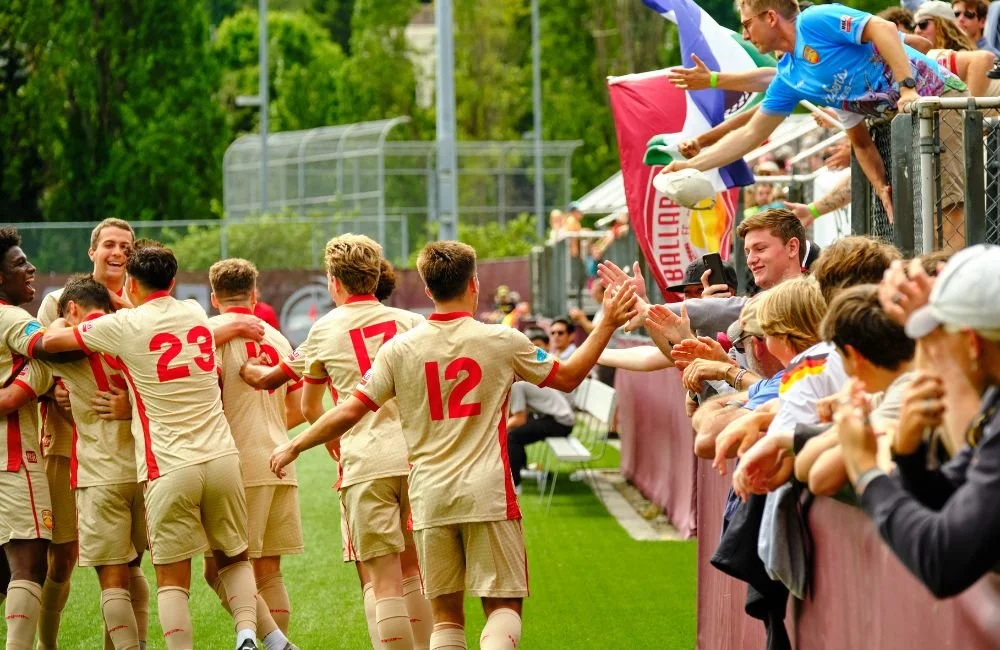
Photo courtesy of Ballard FC
“I can’t say enough good things about this team, this community or this local experience! Interbay Stadium is just the right size. Plus beer garden, food truck, friends, sunshine and SOCCER!” - Saffa Bardaro, longtime Ballard resident
This summer’s Ballard FC match days were truly a local experience - in every aspect. The team's roster included many collegiate players with local roots, as well as rising youth talent from around Seattle. Partners and sponsors were all local, with main sponsor Reuben's Brews being a staple of the Ballard neighborhood since 2012. The scene at the stadium was one of packed bleachers and standing-room only. The family-friendly environment was consistently buzzing with energy, support and pride for their neighborhood soccer team.
“Having Ballard FC in the neighborhood has created a unique atmosphere for our youth players and families. The kids have an opportunity to hang out with their friends, run around, watch some soccer, and cheer for the home team. It is a safe, fun, social space for families. The space is personal enough that you can find old friends and meet new friends.” - Andrew Westmark, Ballard Youth Soccer Executive Director
Ballard Youth Soccer + Ballard FC
As expected, the positive energy surrounding this hyper-local soccer team has favorably impacted the youth soccer scene. Ballard FC partnered with Ballard Youth Soccer (one of SYSA’s recreational clubs) and brought them into the fold right away. Youth soccer players from Ballard were included in game-day activities throughout the season and given opportunities to work with the players, including Ballard FC’s local youth camp running this August (which is completely full).

Ballard Youth Soccer Club players march with Ballard FC in the ‘17th of May’ Norwegian Day parade this year.
Ballard FC has given local youth soccer players the positive experience of seeing an entire community unite over their shared love of soccer. As a young soccer player, when this is happening right in your own backyard, you can’t help but be inspired and fall in love with the game.
Ballard FC on ‘Community’
We talked with Sam Zisette, Co-Founder & GM and Ballard High School graduate, class of 2012, about the community aspect of Ballard FC. Here's what he had to say:
SYSA - Has it made the inaugural season experience of Ballard FC better to have such great support from the community at large right from the start?
"Absolutely! The community support is what Ballard FC is all about. We wanted to provide an outlet for the community to celebrate Ballard and soccer and we are so excited about how much the community has embraced it."
SYSA - What is the team’s current partnership with Ballard Youth Soccer and do you see it continuing/growing in the future?
"Ballard Youth Soccer is an awesome partner. On our Ballard Youth Soccer themed match this season we hosted a free clinic on the field with our players and coaches. We also had Ballard Youth Soccer players walk out with Ballard FC players and be ball kids for multiple matches! We are excited to find more ways to grow the partnership so we can provide high quality and affordable youth soccer opportunities for the community."

Photo courtesy of Ballard FC
SYSA - What are the benefits of having such a strong neighborhood soccer community like this? To Ballard FC? To Ballard Youth Soccer?
"Ballard truly is a soccer loving neighborhood in the heart of a soccer loving city! It's so special for our players to be able to play in front of the passionate fans at Interbay Stadium as it gives them so much to play for and take pride in. For the youth it is amazing for them to be able to come to Ballard FC games and dream of playing for Ballard FC one day and representing their community on the pitch. We hope that in just a few years we can see kids who grew up going to Ballard FC"
Onward!
Ballard FC has done an amazing job in creating a true environment of community soccer in and around the Ballard neighborhood of Seattle. Community soccer is what we are all about here at Seattle Youth Soccer Association and we love seeing the pride, passion and support that Ballard FC has been able to cultivate in such a short time.
Congrats Ballard FC on a strong inaugural season, both on the field and off! Can’t wait for next year!
People of SYSA: Tom Powers, Woodland Volunteer Soccer Coach
In this edition of 'People of SYSA', we have the pleasure of featuring Tom Powers! Tom is a dedicated and caring coach who is very invested in the growth of his players. Tom's coaching style is all about development, but not just in the soccer sense, in the HUMAN sense. He is an upbeat, positive and motivating person with a background full of skills that lend themselves well to coaching and working with kids. He has spent his career working in education and mental health and really values the importance of connection, community and working collaboratively on the soccer field. Here's more from our conversation with Tom:
Welcome to our 'People of SYSA' series! This series is where we talk with players, coaches, administrators, parents, referees and volunteers from all across SYSA and learn a little bit about them and why they love being a part of Seattle Youth Soccer Association.
In this edition of 'People of SYSA', we have the pleasure of featuring Tom Powers! Tom is a volunteer coach with SYSA's Woodland Soccer Club and is also an assistant coach at Eagle Staff Middle School. Tom has been coaching his son's rec team at Woodland for the past 8 years. He started with them at U6 and this upcoming 2022 fall season they will be U15!
Tom is a dedicated and caring coach who is very invested in the growth of his players. Tom's coaching style is all about development, but not just in the soccer sense, in the HUMAN sense. He is an upbeat, positive and motivating person with a background full of skills that lend themselves well to coaching and working with kids. He has spent his career working in education and mental health and really values the importance of connection, community and working collaboratively on the soccer field.
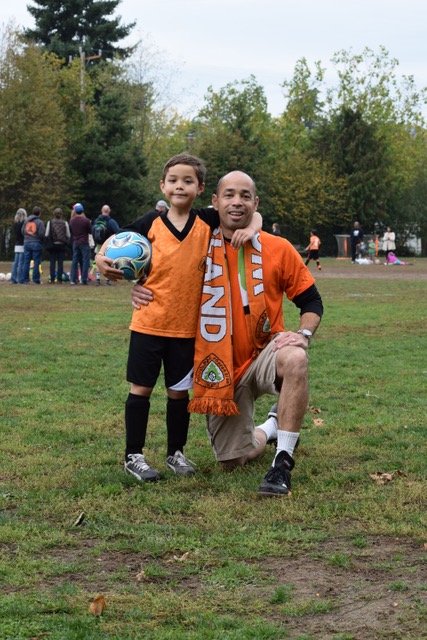
Here's more from our conversation with Tom:
GETTING INVOLVED WITH SYSA
Tom is a wonderful representative of community soccer and all it stands for. He started playing soccer in his 20's when he moved to Seattle and joined a recreational adult league in order to meet people. Later, when his son wanted to start playing, Tom was excited and signed him up for Little Kickers. His son didn't take to that first soccer experience very well so Tom decided to try something new and find a different environment. That's where Woodland Soccer came into the picture.
After registering their son for recreational fall soccer, Tom says his wife announced, "the good news is that I got him on a team, the bad news is that you're coaching!" Tom wasn't the first soccer parent in history to have this information bestowed upon them, the difference with Tom though is that he was prepared. Not to coach soccer specifically maybe, but to work with kids and help them grow and expand. And as Tom says about that first year, "it's 6 year olds - at 6 you are not coaching soccer, you're coaching kids."
STRONG TEAM CULTURE
Nine years later, Tom and his son are still involved in SYSA.
After the first 5 good, positive years of recreational soccer with Woodland (years in which the entire team advanced and grew and every kid gained a solid set of foundational skills which they could use to enjoy soccer throughout the rest of their lives) Tom thought that the team would disband and go their separate ways as middle school started up.
"But elementary school ended and EVERY KID WANTED TO COME BACK," Tom said. So he decided to stick with it and coach the Woodland rec team through middle school. After-all, "the kids enjoyed it, I enjoyed it, we always got better, so why not?" he said.
Tom attributes the players wanting to stay to strong team culture. "Our rec team hasn't lost kids because we have good culture. Our team's practice and games are a couple hours in a week where, as long as they show up and try, the kids can't do anything wrong. We've created a culture where players are always willing to keep trying. If someone messes up (your teammate), they usually know it, they don't need you to tell them." And because of this they keep going, they keep trying again and again, they keep working and growing and having fun and getting better.
"To parents, I always say, give your kids space where, for even 1 hour in a week, where they can do no wrong in your eyes. Kids respond to that, they appreciate those things." Tom has built this mindset into his team culture SO WELL that they've had seasons where, despite losing every game, not a single player left. They all returned for more the following year.
Coaching middle school boys is a different picture though, and Tom knows there more issues at play now than when they were younger. "A big thing we always talk about, a big part of our culture, is that you can't trash talk. You can't trash talk your teammates, the refs, your coaches, OR YOURSELF."
Tom says this last piece has really hit home with some of his players, as middle school kids are especially prone to getting down on themselves, holding themselves to standards of perfection and allowing their self-worth to get wrapped up in performance on the soccer field (or anywhere really). A big part of what Tom does well, is he coaches in a way in which these conversations are continually had so that the kids are able to gain self-awareness and start to coach themselves out of their self-defeating mentalities.
IT'S BIGGER THAN WINNING, ALWAYS
Tom's personal coaching mission statement is "through the principled pursuit of victories and the growth-focused management of losses, I coach to develop caring, resilient adolescents who act with integrity."
One impactful moment that stands out to Tom and exemplifies this statement fully, has to do with a very muddy game, a 11-2 loss and a cherished photo that reminds him of why he coaches. In this image there are huge grins across the faces of his 9-10 year old players, despite the fact that they just lost big time. This was a game where players could easily have walked off the field upset and self-critical, but not this group and not this time. These kids were happy and thrilled to have gotten to play soccer that day. The experience of playing was bigger than winning.
Tom likes to look at this photo and ask, with a big grin across HIS face, "we lost this game, can you tell?"
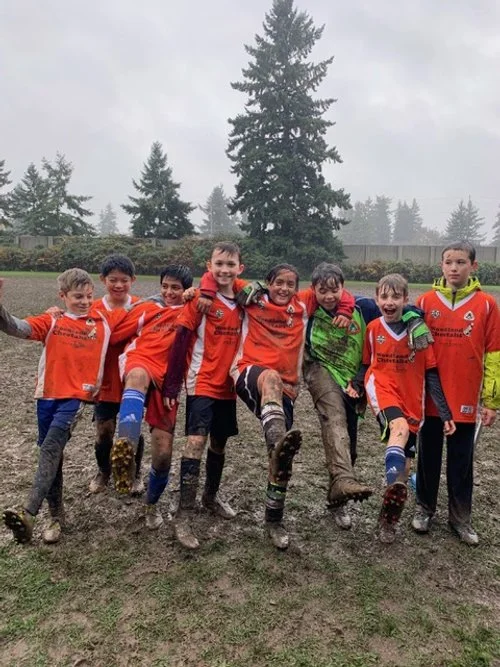
Photos courtesy of Tom Powers
Tom loves this photo because it reminds him of his purpose in coaching. It reminds him that helping players feel good about themselves and put their best foot forward is what it's all about. "I always tell them, play in a way that makes you proud. You will always get better, if you show up you WILL get better, you won't get worse."
OBJECTIVE MEASURES
A big piece of Tom's coaching style is that he likes to give his players objective measures to work towards and point their effort towards on game day (instead of outcome or results based measures such as winning or scoring). Objective measures meaning, what makes a good game for YOU? What small pieces of the game can you focus on improving today? "You have to have different metrics," Tom says. "You can find opportunities to be your best self in every game, and throughout the game."
Here's an example: Tom likes to help his players get faster and increase their speed over the course of the season. To start, he tells them "it doesn't matter how good your footskills are if you can't get to the ball". Over the course of the year, he'll time them on 50s, 100s and 200s and by the end of the season they can actually see themselves getting faster. This is an objective measure that they get better at just by showing up and participating. This is a small piece of their game that they are able to improve through effort and working hard.
FITNESS AND ATTITUDE
Tom is a soccer coach yes, but he's also a self-proclaimed "fitness and attitude" coach. These are his strengths and areas of specialty. The attitude piece comes in because his coaching style was born from his experiences of working in both education and mental health. He's able to use his skills and experience to help his players see a different side of the game:
"I can help people see a different value in sports beyond winning. It's the PURSUIT of winning that has value," Tom says. "Sports is a platform for learning life lessons. It's an opportunity to deal with big emotions, it's an opportunity to be a good guy and treat someone well (a teammate for example) even when they let a goal in or make a mistake."
WORDS OF ENCOURAGEMENT
On closing, we asked Tom for his words of advice in regards to players and parents looking to get involved in SYSA soccer this upcoming fall season.
SYSA - Any advice for parents who have been thinking about getting into coaching?
Tom - "Just do it. It's an opportunity to build a great relationship with your kid and to get to know how they are at their best and worst. It's a window into their life that you wouldn't get otherwise and allows you the chance to have more influence especially as they get older and are at vulnerable stages. I have been able to have more open conversations with my son because I already saw and knew so much about how he deals with emotions: because of soccer, it has been easier to talk about other stuff. So it's been a great opportunity to stay involved in his life and not get shut out."
Also - "coaching also allows you to do some good in the world, no matter how everything else went that day. It's also brought me lifelong friendships with other parents that I wouldn't have met otherwise. Really though, I just enjoy it (coaching) and I wish more people who truly had that perspective (to give kids an enjoyable time) would jump into coaching. At the rec level, we are here for fun and enjoyment, and lots of people can contribute a lot for these kids."
SYSA - Any advice for players who have been thinking about trying soccer for the first time?
Tom - "Join rec because it's fun! Jump in and try. If you don't like it, you don't have to keep doing it. I always say to my players, rec soccer is a VOLUNTARY recreational activity, nobody NEEDS to be here. If anyone really hates it just let me know and I will talk to your parents."
Thank you so much Tom! We appreciate you and are so glad you are a part of our SYSA family!
Here's why volunteering to coach a youth soccer team is totally worth it
As recreational neighborhood soccer programs across Seattle start to open up their fall registration, a question comes to mind for a lot of local parents. Should I volunteer to coach youth soccer this year? Should I volunteer to coach my kids team? Yes, it can seem like a big commitment, but it’s a commitment that comes with so many benefits. Here's a few of the reasons why volunteering to coach a youth soccer team is totally worth it:
Welcome to our SYSA educational series! This series is where we provide advice, guidance and useful tools for parents, coaches and volunteers within the Seattle Youth Soccer Association.
As recreational neighborhood soccer programs across Seattle start to open up their fall registration, a question comes to mind for a lot of local parents. Should I volunteer to coach youth soccer this year? Should I volunteer to coach my kids team?

Image credit: Canva Pro
Yes, it can seem like a big commitment, but it’s a commitment that comes with so many benefits. Here's a few of the reasons why volunteering to coach a youth soccer team is totally worth it:
You get to connect in new ways
Volunteering to coach a youth soccer team put you into a position that connects you with your community. Not only does it get you out into your neighborhood for practice sessions at the local park, but it also allows you the chance to interact with the other parents and volunteer coaches. Putting yourself into an environment with like-minded people who share the same values gives you the opportunity to expand your social circle.
Volunteering to coach your kids soccer team also allows you the opportunity to connect with your child in a new and different way. Not only will you get to spend time with them, but you'll be in a new environment together where you are able to learn more about each other and add to your relationship.
You get to play soccer, and soccer is fun!
One of the best reasons to volunteer to coach a youth soccer team is that it's fun! Volunteering to coach youth soccer gets you outside, gets you active and gets you enjoying something new. Coaching can be a refreshing change of pace from your other daily activities and commitments.
{Related read: Keeping soccer fun! Here's why it's so important}
Also, if you have previous soccer experience, volunteering to coach a youth soccer team can help you rekindle your love for the game. Coaching can motivate you and spur your curiosity to want to learn more, further expand your soccer knowledge and become a student of the beautiful game!
You get to see players improve
One of the most rewarding parts about working with kids on the soccer field is seeing them learn something new and grow from it. Over the course of the season, seeing the team and individual players grow and prosper is hugely inspiring. It's fulfilling to see them find success, especially when they worked hard for it.
And we're not talking about success as in only scoring goals and winning games, we're talking about success when it comes to the little things: improving your touch, learning how to pass, learning how to get along and work together with teammates. All those little things that matter and make the game more enjoyable.
You experience personal growth
Volunteering to coach a youth soccer team can be huge for self-development and personal growth. Taking on new challenges like coaching can put you into situations where you have to expand. Here are just a few examples.
Coaching can help you become more self-aware of how your emotions, body language and communication impacts those around you. Coaching can help you develop patience on several fronts: patience for the shorter attention spans of kids, and patience for the process of progression and improvement. Coaching also requires a lot of self-reflection and ability to objectively look at what you are doing and how you might be able to do things differently.
You get to give back
If you are someone who had a positive sports experience in their youth, you might feel drawn to giving back and paying it forward. Coaching allows you that opportunity.
Giving back to your community is really important because good volunteers are the biggest piece of keeping nonprofit sports programs alive and well. Most neighborhood youth recreational soccer programs wouldn't be functional if it wasn't for their dedicated, hard-working volunteers. Volunteers make it possible for kids in the community to have the opportunity to play soccer, have fun and learn valuable life skills in the process.
There are many, many benefits to volunteering to coach youth soccer, even beyond our list here. While it is indeed a time and energy commitment, the return is huge - and not just for the players but for YOU as well. The benefits you get from coaching are really something special that you can't get anywhere else.
People of SYSA: Sneha Sastry, LVR Volunteer Soccer Coach
To start off the series, this week we have the pleasure of featuring Sneha Sastry. Sneha coaches with LVR Soccer Club and this year she was the recipient of the SYSA Boys Recreational Coach of the Year award. Sneha coaches all three of her son's LVR teams and is an excellent leader for all of her young charges. She is a dedicated, invested and extremely caring coach. She LOVES soccer and is passionate about the game's ability to create community. Sneha feels strongly that soccer is a sport where there's a place for everyone and that every player can absolutely contribute something unique and special to their team. Here's more from our conversation with Sneha:
Welcome to our 'People of SYSA' series! This series is where we talk with players, coaches, administrators, parents, referees and volunteers from all across SYSA and learn a little bit about them and why they love being a part of Seattle Youth Soccer Association.
To start off the series, this week we have the pleasure of featuring Sneha Sastry. Sneha coaches with LVR Soccer Club and this year she was the recipient of the SYSA Boys Recreational Coach of the Year award. Sneha coaches all three of her son's LVR teams and is an excellent leader for all of her young charges.
She is a dedicated, invested and extremely caring coach. She LOVES soccer and is passionate about the game's ability to create community. Sneha feels strongly that soccer is a sport where there's a place for everyone and that every player can absolutely contribute something unique and special to their team.

Photo credit Lynne Craig
Here's more from our conversation with Sneha:
Getting involved with SYSA
Sneha moved to Seattle in 2015. Her oldest son was entering 1st grade at the time. She joyfully recalls the fact that "I signed him up for LVR soccer before I signed him up for school!". While Sneha didn't volunteer to coach that first year, she gradually become involved as the year went on by helping out here and there as needed. The rest is history.
Seven seasons later in 2021, this past fall, she was coaching all three of her son's LVR soccer teams: U7, U11 and U13. When asked about managing the logistics of being able to coach 3 teams, Sneha says that "Saturday's were crazy but so worth it."
Soccer as a community builder
One of the reasons that Sneha decided to get her family involved in SYSA immediately upon moving to Seattle is because she knew that soccer was a great way to meet new friends and get involved. She loves that the sport is such a community builder and allows you to bond with new people over a shared interest.
Sneha's whole family is 'soccer people'. She played soccer herself up through high school and continues to play in adult leagues in Seattle. She currently plays multiple nights a week, both in outdoor 11v11 RATS league and indoor at Arena Sports Magnusson.
"Adult soccer has been huge in my life. It's such a positive, active community and I've made so many good friends. Playing soccer is huge for me because I can socialize, get exercise and be a part of a team. As an adult, where else do you get the opportunity to say 'I got your back!' It's just been great for me."
Effort and individual contribution
When asked about her coaching style, Sneha immediately said "I'm a big effort person. It's all about the effort." With the players, it's always all about hustling and giving your best effort every time you're on the field. It's also about individual contribution as well. As in - what unique thing can YOU bring to the team? To the game?
"I'm never the best person on the soccer field, but I always tell myself that I can be the BEST contributor that I can be. It's all about being yourself, but putting in the effort to be the BEST VERSION of yourself." Sneha tells her LVR players this a lot and works hard to help them find value in the small pieces of the game.
As a coach, she puts a lot of emphasis on the small things that make a difference. The individual contributions from each and every player. "I notice the 10 steps that got us to the goal instead of just the goal itself. The goal is exciting, but I like to notice and point out the things from before (the assist, the tackle that caused the momentum change, etc.)"
Seeing players shift makes it all worth it
One of Sneha's favorite parts about coaching recreational youth soccer is the process of improvement that she sees her players through. "On a personal level, my favorite part about coaching is being able to see the kids shift. Seeing the kids transition from head-down-looking-at-the-ball, to head up, making passes and understanding spacial awareness on the field is just amazing."
Sneha enjoys the part of coaching where she gets to help players who are not sure of what to do. She loves being able to help them take ownership of small pieces of their game, succeed at them and grow their confidence. "Having them feel good about the plays they are making, is what makes me feel really good too," she says. For example, in terms of defending, she often tells her young players that their job is just to be first to the ball. That's it. When they have a specific, manageable objective they are better able to achieve it.
Sneha says her greatest strength as a coach is that she "genuinely cares about these kids," about all of them, not just the superstars. "If you develop a caring nature first, they respond better to everything."
Words of encouragement
On closing, we asked Sneha for her words of advice in regards to players and parents looking to get involved in SYSA soccer this upcoming fall season.
SYSA - Any advice for parents who have thinking about getting into coaching?
Sneha - "If you are thinking about coaching I would say do it, it's fun. It takes time yes, but the value of it is just huge. The dynamics you can have with people (parents, kids) is just amazing. My second piece of advice would be to be clear about expectations, it goes a long way in setting you up for a fun and successful season."
SYSA - Any advice for players who have been thinking about trying soccer for the first time?
Sneha - "My advice for players is to go out and do your best and try not to compare yourself to others. There are always going to be people that are better, but you can always contribute something to a team. You can be a valuable member of a team always. There's so many things you can do in soccer that aren't dribbling and scoring. Slowing someone down, picking someone up, anything. There's a value to being on the field and working your hardest."
And as we were parting, Sneha had one final thing to say about why she coaches youth soccer: "my hope is that these kids learn enough to be able to play lifelong soccer because it's so enjoyable and I want them to enjoy it for a long time."
Thank you so much Sneha! We appreciate you and are so glad you are a part of our SYSA family!
5 steps to building great team culture on your SYSA soccer team
Building great team culture is one of the most important and impactful things that you can do as a youth soccer coach. Taking the time to think about and actively cultivate team culture will help you set your team up for success before you even start the season. It allows you to create an environment, right from the beginning, that fosters growth, teamwork and positivity. Here are 5 steps you can take towards building great team culture on your SYSA recreational youth soccer team:
Welcome to our SYSA educational series! This series is where we provide advice, guidance and useful tools for parents, coaches and volunteers within the Seattle Youth Soccer Association.
Building great team culture is one of the most important and impactful things that you can do as a youth soccer coach. Taking the time to think about and actively cultivate team culture will help you set your team up for success before you even start the season. It allows you to create an environment, right from the beginning, that fosters growth, teamwork and positivity.

Image credit: Canva Pro
The culture on a youth soccer team has a massive impact on how players will perceive the season once it's over. If a team wins all of its game, but has a very negative culture, player may not want to return. On the flip side, if a team doesn't win very much but has strong team culture and the players have fun, you can bet they'll be excited to sign up again next year.
{Related read: Keeping soccer fun! Here's why it's so important}
Besides the environment being a more positive one, and the players having more fun, teams also play better soccer when the culture is good. This is because players are better able to connect, work together, and support each other when there's strong team culture on their soccer team. Players learn better, improve more and are more enthusiastic about playing, as opposed to when they are on a team with toxic culture, cliques and lack of trust among teammates.
While you can let team culture develop organically as the coach, taking the time to actively think about and intentionally build great team culture gives you a strong foot to stand on headed into the season. It helps sets the tone and makes the whole process of starting up a new team more enjoyable. As an involved, caring coach, you want to be be an active builder to proactively create and implement the culture.
Here are 5 steps you can take towards building great team culture on your SYSA recreational youth soccer team:
Step 1: As the coach, know your 'why' and be clear on your values
The process of building great team culture starts with self-reflection. Knowing 'why' you have chosen to coach is important when it comes to setting a culture for your team because it helps you define your values and it gives you foot in the game. When you truly believe in the culture you are trying to set, the entire process becomes much easier to create and promote.
Here are some self-reflection questions to ask yourself:
What is my 'why'? Why do I WANT to coach youth soccer? Why AM I coaching youth soccer?
What core values am I passionate about, both in soccer but also in my own life?
What values do I personally feel are the most important things for players to learn and embody?
Step 2: Choose what core values your team culture foundation will be built on
After reflecting, it's time to decide what core values you would like to build the team culture around. While they should include pieces of your own personal values, you will also need to consider what else the team needs, at large, to be successful together.
There are an infinite number of choices that could benefit the team, definitely. But when it comes to building a foundation, it's important to identify just a few CORE VALUES. Having a small number of core values really allows you to emphasize them and go deep with them during your soccer season.
Here are some examples of foundational core values you could consider:
hard work
integrity
respect
positivity
accountability
resilience
appreciation
trust
selflessness
courageousness
creativity
teamwork
Step 3: Be clear about the team's focus and goal for the season
Is the team’s goal for the season improvement, or winning games? When asked, most coaches will say that it is improvement, but then their actions might show that it is not.
Getting caught up in the winning aspect of youth soccer is easy to do, which is why you should make a commitment to yourself and to your team that everyone’s collective group focus will be on improvement. If wins happen along the way then great. Not a requirement for a successful season, but great and fun none the less.
Make sure that at the beginning of the season, you are crystal clear about the team's focus and goals for the year. And that means stating it out-loud to the other parents. Hold the entire group accountable to this by making it public.
Here's a simple thing you can do to cultivate this element of your team culture. Suggest to parents that they start asking their player "how did you play today?" instead of "did you win?" Simple things this will help steer the collective attitude away from a must-win mentality and towards a mindset of self-improvement and progression.
Step 4: Figure out a plan for building the core values into your practices and games
One of the hardest parts of building great team culture on your SYSA soccer team can be actually figuring out HOW to bring these values into the day to day. While this topic alone could be an entire blog post by itself, this list from Psychology Today is an excellent place to start when it comes to actively developing team culture. Here are just a few ideas to get you started:
Identify leaders on your team that embody the core values and make them captains
Organize practice activities that contain elements of team culture
Allocate team responsibilities to create shared ownership amongst everyone
Create opportunities in which teammates need to collaborate and work together
Recognize teachable moments and use them to encourage your team culture
Have frequent, open discussions surround the team's core values
Step 5: Embody the values yourself
Last but not least, if you want to build good, strong team culture on your SYSA soccer team, as the coach you really need to BE that culture. You must embody it and you must be consistent.
This is super important, because in order to unify your players under a common set of values, they need to buy-in. And it's so much easier for them to buy-in to it when they see you leading the way and setting a great example.
Keeping Soccer Fun! Here's Why it's So Important
In youth soccer these days, it can sometimes seem like fun is no longer a priority. Passion, joy and enthusiasm for the game can often find themselves taking a backseat to winning and scoring goals. Even when players themselves aren't too wrapped up in winning, when they are surrounded by a culture of win-at-all-costs mentality, it is very easy for them to feel the effects of high expectations and put pressure on themselves to perform well, score goals and not make mistakes. Not only does this take the fun out of the game, it also makes it less likely that players will find success or stick with the game for an extended period of time.
Welcome to our SYSA educational series! This series is where we provide advice, guidance and useful tools for parents, coaches and volunteers within the Seattle Youth Soccer Association.
In youth soccer these days, it can sometimes feel like fun is no longer a priority. Passion, joy and enthusiasm for the game too often find themselves taking a backseat to winning and being the best. Even when players themselves aren't all-consumed by this, when they are surrounded by a culture of win-at-all-costs mentality, it is very easy for them to feel the impact of expectations and put pressure on themselves to perform well, score goals and not make mistakes or mess anything up. Not only does this take the fun out of the game, it also makes it less likely that players will find success or stick with the game for an extended period of time.

Image credit: Canva Pro
(It’s important to point out that there’s nothing wrong with winning, absolutely not. Winning is great. Winning is a part of the game. Winning is fun and it gives teams something to strive toward, and a reward for working hard. The problem arises when winning becomes the only thing that matters, and everything else gets sacrificed in the pursuit. What is everything else? Character development, growth-mindset and pure, simple enjoyment of the game to name a few.)
The number one reason that it's important to have fun at soccer is because kids are more likely to participate in activities that they enjoy.
Simple. Having fun on the field keeps kids in soccer, and playing soccer has so many positives. The mental, physical and emotional benefits are extremely high, so keeping kids engaged and wanting to play is the biggest reason why it's so important to keep the fun in the game.
Keeping soccer fun is something that recreational youth soccer is good at, as neighborhood soccer programs are typically centered around that concept. As players start to move into select, competitive, travel and premier programs though, other elements start to come into the picture more and can overshadow or sometimes even replace the 'fun' element for some players. If players, coaches and programs stay diligent to this though, it doesn’t have to be this way.
The truth in the matter is, it is absolutely possible to keep the fun in the game at any level of play. Whether you are playing on your co-ed neighborhood recreational team or on an ECNL team traveling all over the country for games, fun should and can absolutely be a part of the picture. According to this article by author Janis Meredith, a life coach for sports parents, "fun and hard work in youth sports are not mutually exclusive. You can have both."
There are so many developmental benefits to playing youth soccer, not to mention the life skills gained in the process. The level of growth and character development that is available to kids through participation in youth sports is why it's so important that kids are having fun and wanting to play.
When kids are having fun at soccer...
They get numerous physical and mental health benefits
It's important to have fun at soccer because soccer helps kids stay active and get outside! Running around on a soccer field is fantastic physical fitness. And having fun playing soccer is not only good for their physical health, but fun itself is also good for mental health! Smiling, laughing, and feeling joy improves mood, self-esteem and general overall positive mindset and outlook.
They learn better and they develop new skillsets
When kids have fun they learn better! Problem solving and decision making are just some of the many skills they grow at when they are enjoying themselves on the soccer field. They learn to be curious and try to figure things out on their own. Other skills that playing soccer can help develop include focus, patience, perseverance, courageousness and creativity.
They get practice interacting and learning to work as a team
Keeping the fun in youth soccer is also great for kid's social interaction and growth of relational skills. They learn to interact and communicate with other people. Players have to work together as a team and figure things out as a group. They learn to be socially aware, encouraging, empathetic, appreciative, respectful and have trust for others in a group setting. They make new friends and are introduced to different social groups outside of school.
The best part is that to get all of these benefits, the only thing a kid needs is to HAVE FUN when playing soccer. They don't need to win every match. They don't need to play perfectly. They get these extremely valuable developmental benefits if they are finding joy in the process, regardless of the scoreline. While our culture may try to tell us that winning is everything, winning IS NOT everything in soccer. Development, growth and healthy mindset ARE - which is why it is SO important to have fun at soccer.